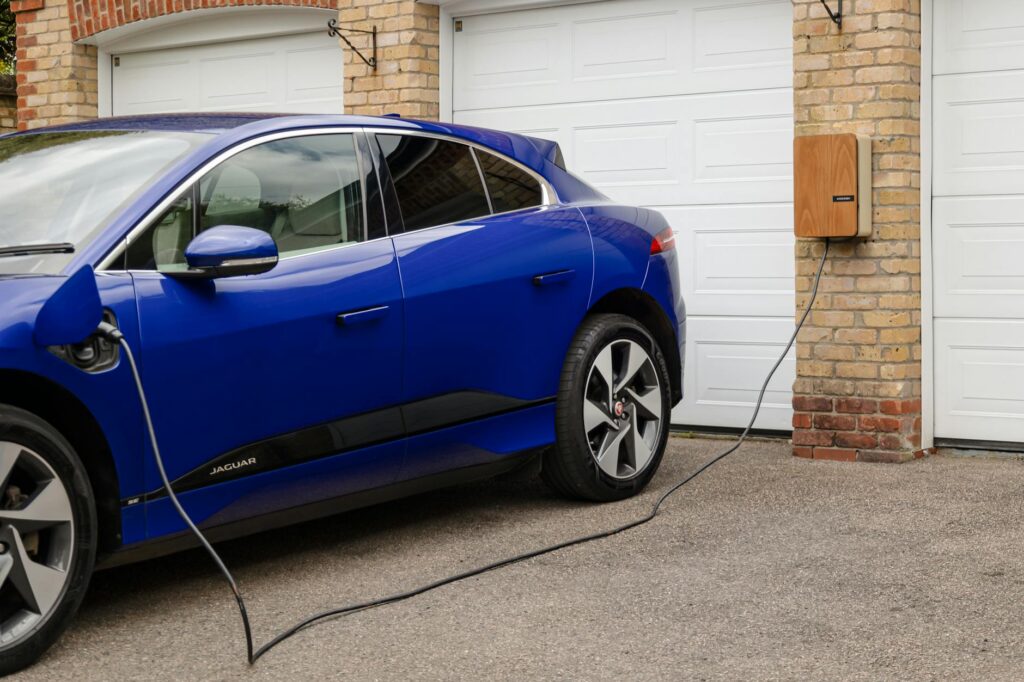
Level 1 charging uses standard 120V outlets and costs $500-$1,500 to set up with minimal installation expense, while Level 2 requires 240V installation at $500-$2,500 plus equipment costs of $500-$2,000. Level 2 charging is significantly faster and more cost-effective for daily EV ownership, delivering 25-30 miles of range per hour compared to Level 1’s 3-5 miles per hour.
Level 1 Charging: Initial Costs and Long-Term Economics
Level 1 charging is the most affordable entry point for EV owners. You can use any standard 120-volt household outlet, which means zero installation costs in most cases. The included charging cable (often called a Level 1 EVSE) typically comes with your vehicle or costs $200-$500 if purchased separately.
However, the real expense emerges over time. Level 1 charging is slow—most modern EVs gain only 3-5 miles of range per hour. For a Tesla Model 3 with a 75 kWh battery, a full charge takes 24-30 hours. This works for overnight charging if you drive under 30 miles daily, but creates problems for heavier users.
Electricity costs for Level 1 are straightforward. At the national average of $0.14 per kWh, fully charging a 75 kWh EV costs approximately $10.50 per charge. If you charge daily, expect roughly $315 monthly in electricity costs.
The hidden cost: opportunity loss. Level 1 ties up your outlet for extended periods and provides insufficient charging for most daily commutes. Level 1 remains practical only for secondary vehicles or homes where owners rarely exceed 20-30 miles daily.
Level 2 Charging: Installation Investment with Superior Returns
Level 2 charging requires a 240-volt circuit installation, making it more expensive upfront but dramatically superior for regular EV owners. Installation costs vary by location and existing electrical infrastructure:
- New circuit installation: $500-$2,500 depending on distance from breaker panel and local labor rates
- Electrical panel upgrades: $1,000-$3,000 if your current service is insufficient
- EVSE equipment: $500-$2,000 (hardwired units) or $400-$1,200 (plug-in units)
- Permits and inspections: $100-$300
Total typical installation: $1,500-$3,500 for most homes with existing 200-amp service.
The performance advantage is substantial. Level 2 delivers 25-30 miles of range per hour, fully charging most EVs overnight. That same 75 kWh battery reaches full charge in 5-8 hours, perfect for overnight charging before commuting.
Electricity costs remain similar to Level 1 on a per-kWh basis ($10.50 per full charge), but Level 2 enables better charging patterns. Many EV owners charge during off-peak hours (9 PM-7 AM) when rates drop to $0.08-$0.11 per kWh, reducing charging costs to $6-$8 per full charge.
Federal tax credits offset some installation costs. The federal EV tax credit includes up to $1,000 for home charger installation (check current regulations), and many states offer additional rebates. Combined incentives can reduce net installation costs by 25-40%.
Return on investment appears within 3-5 years for regular drivers. Level 2 also adds home value—real estate data shows EV charging capability increases home value by $500-$1,500 for future buyers.
Key Cost Comparison Factors and Considerations
Daily Driving Patterns: If you drive under 30 miles daily with no highway trips, Level 1 meets your needs. Drivers exceeding 40 miles daily require Level 2 to maintain reliable charging without multi-day charge cycles.
Electricity Rates and Time-of-Use Plans: Regions with aggressive time-of-use (TOU) rates see significant savings with Level 2’s flexibility. Setting your charger to start at 11 PM when rates drop from $0.18 to $0.10 per kWh saves $60-$100 monthly for high-mileage drivers.
Home Electrical Capacity: Older homes with 100-amp service may require $1,500-$3,000 in panel upgrades before Level 2 installation. Newer construction (built after 2000) typically has sufficient capacity.
Weather and Temperature: Cold climates see reduced EV range (up to 40% loss), making Level 2’s faster charging essential. Southern climates may satisfy more drivers with Level 1’s slower pace.
Future Resale Value: Level 2 chargers significantly improve home appeal to EV-owning buyers, estimated at 5-8% premium in EV-adoption markets.
How to Calculate Your EV Charging Costs
To determine your exact installation and operating costs, use our EV Charging Cost Calculator. Enter your local electricity rates, vehicle battery size, daily mileage, and charging level to see detailed breakdowns of installation costs, monthly electricity expenses, and payback timelines. This calculator accounts for time-of-use rates and efficiency losses, giving you the most accurate projection for your specific situation.
Frequently Asked Questions
Can I install Level 2 charging myself?
No. Level 2 charging requires licensed electrician installation to meet National Electrical Code (NEC) standards and pass local inspections. Improper installation creates fire hazards and voiding of warranties. Always hire a licensed electrician—installation costs include expertise you cannot safely replicate.
Will Level 1 charging damage my EV battery?
No, Level 1 charging is safe for EV batteries. The slower charging rate (trickle charge) actually generates less heat and is gentler on battery chemistry than fast charging. However, Level 1’s extended charge times mean the battery sits at high state-of-charge longer, which may marginally reduce long-term battery lifespan if used exclusively over many years.
Is a 50-amp Level 2 charger better than 30-amp?
A 50-amp charger delivers power faster (up to 37 kW vs. 22 kW), but most homes and vehicles cannot fully utilize the difference. Most modern EVs max out at 11-19 kW charging capacity. A 30-amp Level 2 charger provides 7.2 kW, which fully satisfies 95% of home charging needs. Upgrade to 50-amp only if you own a dual-motor EV with 19+ kW capability and want maximum flexibility.
- Level 2 EV Charging Station — Direct product match for the main topic; readers actively comparing Level 1 vs Level 2 will need to purchase a charger
- Electrical Installation Tools & Supplies Kit — Supports DIY installation aspects mentioned; relevant for readers considering installation costs and options
- Home Energy Monitor — Helps readers track charging costs and energy consumption mentioned in cost breakdown analysis
SPONSORED
Estimating Software Built for Electrical Contractors
ArcSite lets you draw site plans, create estimates, and close jobs faster — all from your phone or tablet. Used by 100,000+ field service professionals.
Try ArcSite Free →Affiliate partner — we may earn a commission at no cost to you.