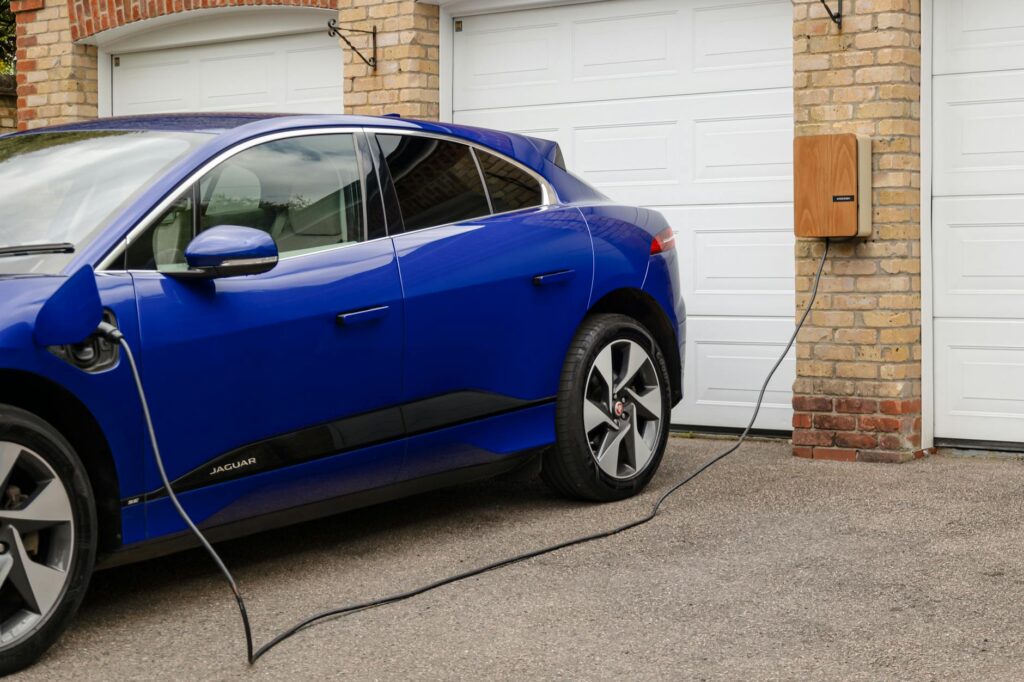
Level 1 charging uses your standard 120V household outlet and costs $0.03-$0.05 per mile, making it the cheapest option upfront but slowest for daily use. Level 2 charging requires a 240V installation ($500-$2,500), charges 3-8 times faster, and costs $0.02-$0.04 per mile—offering better long-term value for most EV owners. Understanding these differences helps you choose the right charging solution for your home and budget. (Related: 7 Essential Steps to Size Furnace Electrical Connections Correctly in 2026) (Related: 5 Essential Steps to Interconnected Hardwired Smoke Detector Wiring in 2026) (Related: 240V Dryer Circuit Installation: 5 Essential Steps in 2026) (Related: 7 Steps to Size Your Solar Panel System Calculator in 2026) (Related: 3 Phase Voltage Drop Chart: Complete 2026 Guide for Proper Wire Sizing) (Related: 5 Ways to Master Attic Outlet Installation in 2026)
Understanding Level 1 vs Level 2 Charging Basics
Level 1 charging is the simplest option available. It plugs directly into any standard 120-volt household outlet, just like your refrigerator or lamp. This means there’s zero installation cost—you can start charging immediately. However, Level 1 adds only 2-5 miles of range per hour of charging, which translates to roughly 40-60 miles of range overnight (8-12 hours). For someone with a short commute under 30 miles daily, this might be sufficient.
Level 2 charging operates on 240 volts, the same voltage your electric dryer or oven uses. It requires professional installation of a dedicated charging station, but delivers dramatically faster charging: 10-30 miles of range per hour depending on your vehicle and equipment. This means a full charge in 4-10 hours instead of 24-48 hours. Most EV owners with longer commutes or multiple vehicles find Level 2 essential for practical daily use.
The key difference comes down to amperage and power delivery. Level 1 provides 12-16 amps at 1.4 kW, while Level 2 supplies 16-50 amps at 3.5-19.2 kW. This exponential increase in power delivery speed is why Level 2 dominates the residential charging market.
Complete Cost Breakdown: Installation and Operating Expenses
Level 1 Installation Costs: This is essentially free. You likely already have compatible outlets, and no electrician visit is needed. The vehicle comes with a standard Level 1 adapter cord included. Your only potential expense is replacing an outlet if it’s damaged, which typically costs $15-$50.
Level 2 Installation Costs: This is where you’ll invest money. A licensed electrician must assess your electrical panel capacity and run a 240V circuit to your garage or designated charging location. Installation typically costs $500-$2,500 depending on:
- Distance from electrical panel to charging location (longer runs cost more)
- Existing circuit availability (using existing circuits saves $300-$800)
- Panel upgrade necessity (if your panel lacks capacity, add $1,500-$3,000)
- Charging station brand and features ($300-$1,200 equipment cost)
- Your geographic region and local labor rates
Operating Costs Per Mile: Level 1 costs approximately $0.03-$0.05 per mile charged, while Level 2 costs $0.02-$0.04 per mile. These figures vary based on your local electricity rates. At the national average of $0.14 per kWh, charging an efficient EV (4 miles per kWh) costs roughly $0.035 per mile with either charging level—the difference is negligible here. However, Level 2’s superior efficiency and faster charging reduce overall electricity loss in the system.
Monthly Charging Expense Example: For a 30-mile daily commute (900 miles monthly), assuming 4 miles per kWh and $0.14/kWh rates:
- Monthly energy cost: 225 kWh × $0.14 = $31.50
- Annual charging cost: $378
This minimal operating cost difference means your installation choice should focus on charging speed and convenience rather than electricity expenses.
Return on Investment: When Level 2 Makes Financial Sense
The break-even analysis for Level 2 installation depends on your driving habits and electricity rates. If you drive fewer than 30 miles daily and have flexible charging windows, Level 1 works fine and saves you $500-$2,500 upfront. However, if you drive 40+ miles daily or own multiple EVs, Level 2 becomes invaluable.
Financial advantages of Level 2 include:
- Reduced charging time means less stress on battery management systems (minor longevity benefit)
- Ability to charge two vehicles sequentially or manage household power better
- Increased home resale value (most real estate agents estimate $500-$1,500 added value)
- Future-proofing for household electrification trends
- Eligibility for tax credits and rebates ($500-$1,000 in many states)
Federal tax credits through the Inflation Reduction Act provide up to 30% of installation costs (maximum $1,000), significantly reducing your net expense. Many states and utilities offer additional rebates ranging $500-$2,000. Check your local programs to determine true out-of-pocket costs.
For most homeowners, Level 2 pays for itself through convenience and resale value within 5-7 years, making it a smart long-term investment despite higher upfront costs.
Use Our EV Charging Cost Calculator
Want to determine your exact charging costs? Our EV charging cost calculator helps you compare Level 1 and Level 2 expenses based on your specific electricity rates, vehicle efficiency, and driving patterns. Input your local utility rate and vehicle specifications to see precise monthly and annual projections. This tool eliminates guesswork and provides data-driven insights for your charging decision.
Frequently Asked Questions
Can Level 1 charging damage my vehicle battery?
No. Level 1 charging is completely safe for your EV battery. Slower charging actually generates less heat, which is slightly beneficial for long-term battery health. Modern EVs include sophisticated battery management systems that regulate charging speed regardless of outlet type. The only disadvantage is convenience, not safety.
Do I need a permit for Level 2 installation?
Yes, in most jurisdictions. A licensed electrician handles permitting as part of professional installation. Permits ensure the installation meets electrical codes and is safe. DIY installation without proper permitting creates fire hazards and voids your home insurance. Always hire a licensed professional for Level 2 work.
Can I use Level 1 while traveling or at work?
Absolutely. Level 1 adapters work at any standard outlet worldwide. They’re perfect for supplemental charging during 8-hour workdays or hotel stays. Many EV owners keep their Level 1 adapter in the vehicle specifically for this purpose. It’s slow but reliable anywhere you find a standard outlet.