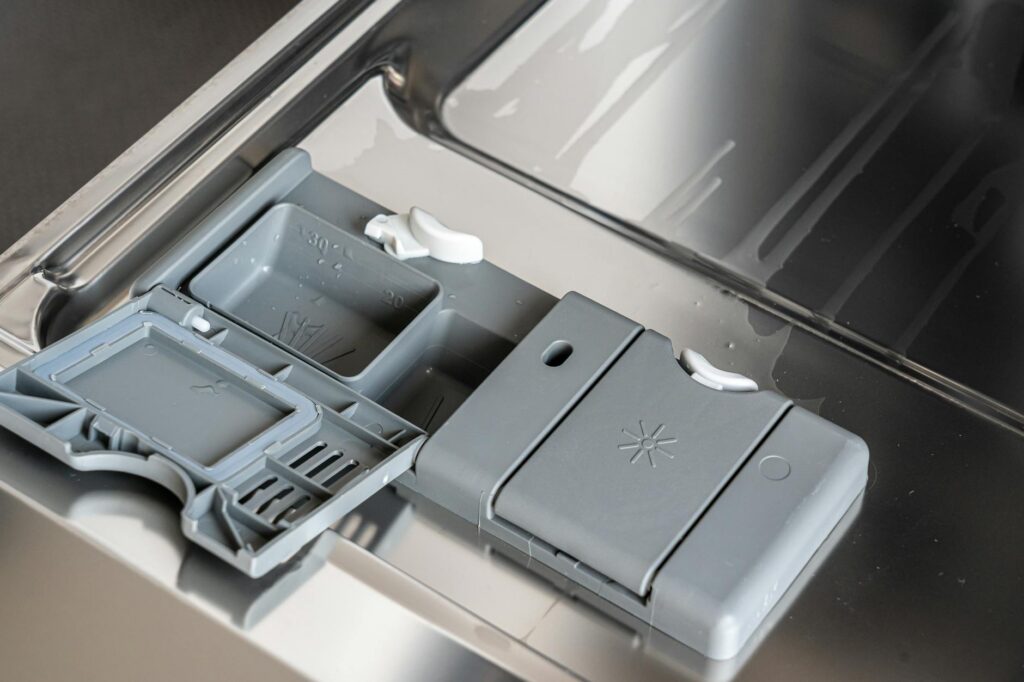
A dishwasher requires its own dedicated 20-amp circuit with proper wire sizing, grounding, and overcurrent protection—this isn’t optional if you want safe, code-compliant installation. The National Electrical Code (NEC) mandates these requirements because dishwashers draw significant current during operation, and shared circuits create fire and shock hazards. Understanding the exact requirements upfront saves you money, prevents callbacks, and keeps your kitchen safe.
Dedicated Circuit Requirements for Dishwashers
The NEC requires a single, dedicated 120-volt circuit for every dishwasher installation. This means the circuit serves only the dishwasher—no other outlets, lights, or appliances can share it. Why? Dishwashers typically draw 12–16 amps during normal operation, particularly when the heating element engages. A shared circuit risks overloading, tripped breakers, and potential fire conditions.
Circuit Breaker and Amperage
Use a 20-amp breaker to protect your dishwasher circuit. This matches the standard capacity of household dishwasher motors and heating elements. The 20-amp rating provides adequate headroom; most dishwashers operate at 80% of circuit capacity (16 amps), which is the NEC safe operating threshold. Installing a larger breaker—say 30 amps—defeats the protection system and violates code.
Voltage and Outlet Configuration
Standard residential dishwashers run on 120 volts. Install a 20-amp, 125-volt outlet behind the dishwasher opening or in the adjacent cabinet kickspace. The outlet must be accessible without removing the dishwasher. Some installations use a junction box with hardwired connection instead of a receptacle; both methods are acceptable when code requirements are met.
GFCI Protection
Ground Fault Circuit Interrupter (GFCI) protection is required for all dishwasher circuits per NEC Article 210.8. GFCI devices detect ground faults and shut off power in milliseconds, preventing electrocution. You can satisfy this requirement by installing a GFCI outlet or using a GFCI breaker in your electrical panel. A GFCI breaker is often simpler—it protects the entire circuit automatically and costs less than a dedicated GFCI outlet.
Wire Sizing: From Panel to Dishwasher
Correct wire gauge is critical for safety and performance. The conductors carrying current to your dishwasher must match the breaker amperage and the distance from the panel to the appliance.
Wire Gauge Selection
For a 20-amp dishwasher circuit, use 12 AWG (American Wire Gauge) copper wire. This is larger than the 14 AWG used in standard household circuits, and it handles the higher current demand without overheating. Never downsize wire to save money—undersized conductors overheat, damage insulation, and create fire risk. If you’re running wire more than 50 feet from the breaker panel, consult the NEC ampacity tables or a licensed electrician; longer runs may require larger wire.
Wire Type and Conduit
Use 12/2 NM-B (Romex) cable for in-wall runs, or 12 AWG THHN/THWN conductors in metal conduit if the wire runs through exposed areas or outside walls. In crawlspaces and attics, protect NM-B with conduit sleeves where it passes through framing members. If your dishwasher will be hardwired to a junction box, use appropriately sized flex conduit or metal tubing to connect from the wall box to the appliance terminal compartment.
Grounding Conductors
Your 12/2 NM-B cable includes a bare copper ground wire; this is non-negotiable. The ground wire connects to the green screw on the outlet or directly to the dishwasher frame if hardwired. Proper grounding provides a safe return path for fault current and is essential for GFCI operation. Never omit or repurpose the ground conductor.
Installation Best Practices and Common Mistakes
Proper installation technique ensures your circuit performs safely for years. Many DIYers and contractors make preventable errors that create callbacks and safety issues.
Routing and Support
Run your wire through studs, then secure it with staples every 16 inches and within 12 inches of outlets and boxes. Never lay cable loosely across joists or through damp crawlspaces without protection. In kitchens, route the dishwasher circuit away from plumbing supply lines; if crossing is unavoidable, maintain 6-inch separation and shield vulnerable areas with plastic sleeves.
Outlet Placement
The outlet must be accessible without moving the dishwasher. The best location is on the side wall of the cabinet opening, 12 inches above the floor. Some installers place the outlet in the kickspace; ensure it’s protected from moisture and the dishwasher spray. Never locate the outlet directly behind the dishwasher where water may contact it during installation or maintenance.
Breaker Identification
Label your breaker clearly: “Dishwasher” in legible print. A homeowner who doesn’t know which breaker controls the dishwasher may accidentally cut power to the wrong circuit—a safety and service nightmare. Use a permanent marker or printed label on the inside of your panel door.
How to Use Our Electrical Calculator
Sizing conductors and verifying ampacity is straightforward with the right tool. Visit our wire size calculator to input your breaker amperage (20 amps), wire type (copper), installation method (NM-B in walls), and distance from the panel. The calculator instantly confirms that 12 AWG is correct for your run and shows the actual ampacity. This removes guesswork and gives you confidence before you buy materials or begin installation.
Frequently Asked Questions
Can I use a 15-amp breaker and 14 AWG wire for a dishwasher?
No. The NEC requires a minimum 20-amp circuit for dishwashers, which mandates 12 AWG wire. A 15-amp breaker with 14 AWG wire is undersized and violates code. If your dishwasher’s nameplate shows it draws 12–16 amps, a 20-amp circuit is the minimum safe choice. Undersized circuits cause nuisance breaker trips and fire hazards.
Is a GFCI outlet required if I install a GFCI breaker?
No—you need one or the other, not both. A GFCI breaker in your electrical panel protects the entire circuit and is often the preferred, more cost-effective approach. If you use a standard breaker, install a 20-amp GFCI outlet instead. Either method satisfies NEC Article 210.8 requirements for kitchen appliances.
Can my dishwasher outlet be in an adjacent room?
The outlet should be accessible without removing the dishwasher, so it’s usually placed in the cabinet side wall or kickspace. Codes don’t explicitly forbid routing to another room, but this creates maintenance headaches and risks water damage if the dishwasher ever leaks. Best practice is to keep the outlet within the cabinet opening area, protected from direct spray and standing water.
- Southwire 12/2 NM-B Electrical Wire (50 ft) — Post discusses proper wire sizing for dishwasher circuits; 12-gauge wire is standard for 20-amp dedicated circuits
- Leviton 20-Amp Single Pole Circuit Breaker — Post emphasizes need for 20-amp overcurrent protection; essential component for code-compliant dishwasher installation
- Klein Tools Electrical Test Kit/Multimeter — Helps verify proper grounding, voltage, and circuit integrity during dishwasher installation and troubleshooting
Related reading: Dedicated Appliance Circuits: What Needs Its Own Breaker.
Related: Microwave Circuit Requirements: Dedicated vs Shared Outlets
SPONSORED
Estimating Software Built for Electrical Contractors
ArcSite lets you draw site plans, create estimates, and close jobs faster — all from your phone or tablet. Used by 100,000+ field service professionals.
Try ArcSite Free →Affiliate partner — we may earn a commission at no cost to you.