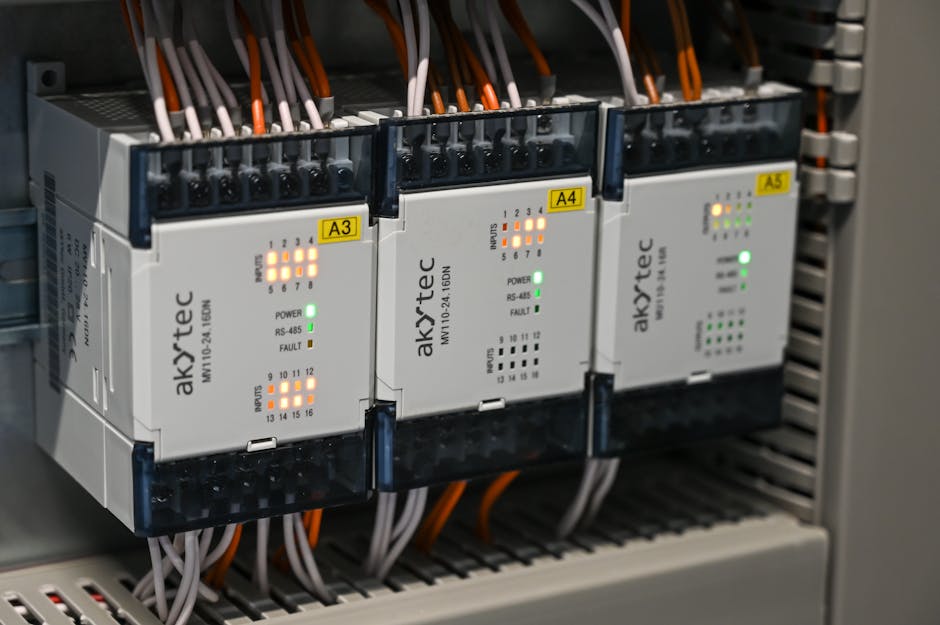
AFCI breakers protect bedrooms and living spaces by detecting dangerous arc faults and disconnecting power within milliseconds. NEC code mandates AFCI protection for all bedroom branch circuits and most living area outlets to prevent electrical fires caused by damaged wiring or equipment.
What Are AFCI Breakers and How Do They Work?
Arc fault circuit interrupter protection works by continuously monitoring electrical current for the irregular waveforms that characterize dangerous arcing conditions. Unlike a standard breaker that responds only to overloads or short circuits, an AFCI breaker uses sophisticated electronics to distinguish between normal electrical noise and the high-frequency signatures produced by a failing wire, a damaged cord, or a loose connection.
When the breaker detects arc fault signatures — typically in the range of 30,000 to 40,000 arc events per second — it trips within milliseconds, cutting power before enough heat accumulates to ignite surrounding materials. The Occupational Safety and Health Administration (OSHA) electrical safety standards note that electrical arcing is a leading cause of workplace and residential fires, making detection technology like AFCI critical for occupant safety.
There are two primary types used in residential installations:
- Combination AFCI breakers — detect both parallel arcs (wire-to-wire) and series arcs (breaks within a single conductor). This is the type required by current NEC code.
- Branch/Feeder AFCI breakers — an older designation that covered fewer arc fault types and is no longer sufficient for new NEC-compliant installations.
NEC Code Requirements for Bedroom and Living Space AFCI Protection
What rooms require AFCI breakers under NEC code?
Based on the National Electrical Code (NEC) 2023 edition, Section 210.12, arc fault circuit interrupter protection is required for all 120-volt, single-phase, 15- and 20-ampere branch circuits supplying outlets or devices in the following residential locations:
- Bedrooms (required since NEC 1999 — the longest-standing AFCI requirement)
- Living rooms and family rooms
- Dining rooms and parlors
- Libraries and dens
- Sunrooms and recreation rooms
- Closets and hallways
- Kitchens and laundry areas (added in more recent code cycles)
- Dormitories
In practical terms, bedroom outlet AFCI compliance has been mandatory for over two decades, but the expansion to living rooms and virtually all habitable spaces reflects the growing body of fire investigation data linking arc faults to structure fires. Local jurisdictions may adopt NEC cycles on different timelines, so always verify which edition your local authority having jurisdiction (AHJ) has adopted before beginning work.
NEC AFCI requirements for residential wiring apply to new construction and to alterations or extensions of existing branch circuits. If you’re adding an outlet to a bedroom or living room circuit, that circuit must be upgraded to AFCI protection.
AFCI vs Standard Circuit Breakers: Key Differences
A standard circuit breaker protects wiring from overloads and bolted short circuits — conditions that create large, sustained fault currents. What a standard breaker cannot detect is a series arc: a break in a conductor that creates intermittent arcing with enough air gap to limit current below the breaker’s trip threshold, yet generate enough heat to start a fire.
Here is a side-by-side comparison of the key differences:
| Feature | Standard Breaker | Combination AFCI Breaker |
|---|---|---|
| Overload protection | Yes | Yes |
| Short circuit protection | Yes | Yes |
| Series arc detection | No | Yes |
| Parallel arc detection | No | Yes |
| NEC 210.12 compliant | No (for covered spaces) | Yes |
| Typical cost | $5–$15 | $35–$60 |
The cost differential is significant but reflects the embedded microprocessor technology that makes arc fault detection possible. For circuit load planning that accounts for AFCI-protected bedroom and living room branch circuits, use our electrical load calculator to verify your panel capacity before adding protection devices.
Installation and Maintenance Considerations
AFCI breakers install at the panel in place of a standard breaker. The key difference during installation is the white neutral pigtail wire on the AFCI device — this wire must connect to the neutral bus bar, and the circuit neutral must connect to the breaker’s neutral terminal rather than directly to the bus. Skipping this step is the most common installation error and will prevent the device from functioning correctly.
Maintenance considerations include:
- Monthly self-testing — press the TEST button and verify the breaker trips, then reset. This confirms the detection electronics are operational.
- Visual inspection — look for discoloration or heat marks on the breaker face annually.
- Replacement timeline — AFCI breakers have an estimated service life of 30–40 years under normal conditions, but persistent nuisance tripping on a circuit known to be free of faults may indicate a failing device.
Common AFCI Nuisance Tripping Solutions
Why do AFCI breakers trip and how do you stop nuisance tripping?
Living room AFCI installation complaints frequently involve nuisance tripping — the breaker trips without an apparent fault. This happens because AFCI electronics are sensitive by design, and certain appliances or wiring conditions can mimic arc fault signatures. According to guidance from the OSHA electrical hazards program, distinguishing between equipment-generated electrical noise and genuine arc conditions is one of the ongoing engineering challenges in AFCI technology.
Common causes and solutions:
- Treadmills and vacuum cleaners — brush-type motors generate electrical noise that resembles arc signatures. Try plugging these into a dedicated circuit or using a motor-type surge protector.
- Older fluorescent light fixtures — the ballasts can trigger AFCI devices. Replace with LED fixtures to eliminate the issue.
- Loose neutral connections — a loose neutral at any device in the circuit creates actual arcing. Check and tighten all outlet and switch wire connections on the affected circuit.
- Extension cord damage — frayed or pinched extension cords cause real arc faults.
Recommended Resources:
- Eaton CH Arc Fault Circuit Interrupter Breaker — Direct product match – AFCI breakers are the main subject of the guide, and readers need reliable options for bedroom/living room installation
- Fluke Digital Multimeter for Electrical Testing — Complements AFCI content – DIYers and electricians need testing tools to verify proper AFCI installation and electrical safety
- Southwire Electrical Wire & Cable (12 AWG/14 AWG) — Related safety product – damaged wiring is a primary cause of arc faults discussed in the guide; quality wire helps prevent the hazards AFCI breakers protect against
Related: AFCI Breakers: Essential Protection for Bedrooms & Living Spaces
Related: GFCI vs AFCI vs Standard Breakers: A Complete Guide
Related: Complete Guide to GFCI vs AFCI vs Standard Breakers 2026
SPONSORED
Estimating Software Built for Electrical Contractors
ArcSite lets you draw site plans, create estimates, and close jobs faster — all from your phone or tablet. Used by 100,000+ field service professionals.
Try ArcSite Free →Affiliate partner — we may earn a commission at no cost to you.
Advertisement