Voltage drop is one of the most critical yet frequently overlooked aspects of electrical system design. Whether you’re installing a new circuit, extending a branch circuit to a distant load, or troubleshooting unexplained equipment failures, understanding voltage drop can make the difference between a safe, efficient installation and a problematic one that costs money and creates safety risks.
In this comprehensive guide, I’ll explain what voltage drop is, why it matters for your electrical systems, and provide you with practical methods to calculate and fix it in your installations.
What Is Voltage Drop and Why Should You Care
Voltage drop is the reduction in electrical potential as current flows through a conductor. Think of it like water pressure dropping as water flows through a long pipe—the longer the pipe and the more water flowing through it, the greater the pressure loss.
In electrical terms, when current travels through a wire, it encounters resistance. This resistance, combined with the current flowing through it, creates a voltage loss according to Ohm’s Law (V = I × R). If you start with 120 volts at the source and lose 5 volts due to the wire resistance over a long run, your load only receives 115 volts.
Why does this matter? Several important reasons:
- Equipment Performance: Motors run slower and hotter with reduced voltage. Lighting appears dimmer. Heating elements take longer to reach temperature.
- Equipment Lifespan: Most electrical equipment is designed to operate within ±10% of rated voltage. Excessive voltage drop forces motors and other devices to draw more current to perform their rated work, causing premature failure.
- Safety: Increased current draw creates additional heat in conductors, potentially causing insulation breakdown and fire hazards.
- Code Compliance: The National Electrical Code (NEC) Article 210.19(A) specifies that branch circuits should not exceed 3% voltage drop, and the combined voltage drop for branch circuits plus feeder circuits should not exceed 5%.
These percentages might sound small, but in practical applications they represent real problems. On a 240-volt circuit with a 5% drop, you’re losing 12 volts—enough to significantly impact motor performance.
Calculating Voltage Drop: Practical Methods and Examples
The fundamental formula for voltage drop is straightforward:
VD = (2 × L × I × R) ÷ 1000
Where:
- VD = Voltage drop in volts
- L = Length of conductor in feet (one-way distance)
- I = Current in amperes
- R = Resistance of conductor in ohms per 1,000 feet
- The “2” accounts for both conductors (out and back)
Let’s work through a real-world example. Suppose you’re installing a 240-volt, 30-amp circuit to power a water heater located 150 feet away from the panel.
Step 1: Determine the wire size needed for ampacity. For 30 amps at 240 volts, NEC Table 310.15(B)(2)(A) requires at least 10 AWG copper wire (rated for 30 amps).
Step 2: Find the resistance of your conductor. According to standard resistance tables, 10 AWG copper has a resistance of approximately 1.24 ohms per 1,000 feet.
Step 3: Calculate voltage drop.
VD = (2 × 150 × 30 × 1.24) ÷ 1000
VD = (9,000 × 1.24) ÷ 1000
VD = 11,160 ÷ 1000
VD = 11.16 volts
Step 4: Calculate the percentage drop.
Percentage = (11.16 ÷ 240) × 100 = 4.65%
This exceeds the NEC recommended maximum of 3% for a branch circuit. The solution is to upsize to 8 AWG copper (resistance of 0.78 ohms per 1,000 feet):
VD = (2 × 150 × 30 × 0.78) ÷ 1000 = 7.02 volts (2.93%)
Now we’re within acceptable limits. This example demonstrates why proper sizing during the planning phase prevents costly rework later.
For quick calculations on various wire sizes and distances, consider using our voltage drop calculator, which eliminates manual lookup errors and saves time on repetitive calculations.
Practical Solutions to Fix Voltage Drop Problems
If you’ve identified a voltage drop problem in an existing installation, you have several options:
- Upsize the Conductor: This is the most common solution. Moving from 10 AWG to 8 AWG, or 12 AWG to 10 AWG, significantly reduces resistance and voltage drop. While this increases material and labor costs, it’s often the most reliable fix.
- Reduce the Circuit Distance: Relocate the electrical panel closer to the load, or install a sub-panel nearer to distant equipment. This is expensive but sometimes necessary for very long runs.
- Reduce the Current: If the load allows, operating at lower current reduces voltage drop proportionally. For example, two 120-volt circuits instead of one 240-volt circuit over a long distance can distribute the load.
- Use Higher Voltage: Stepping up to 277 volts or 480 volts for long-distance transmission reduces current for the same power, thereby reducing voltage drop. This requires appropriate transformers and equipment rated for higher voltages.
- Improve Conductor Material: Aluminum has higher resistance than copper. If aluminum was used, switching to copper reduces resistance by approximately 60%, though this also significantly increases cost.
In practice, upsizing the conductor is the solution electricians recommend most often because it’s straightforward to implement and requires no load rearrangement.
Frequently Asked Questions About Voltage Drop
What is the maximum allowable voltage drop according to the NEC?
The NEC Article 210.19(A) recommends that branch circuit voltage drop should not exceed 3%, while the combined voltage drop for branch and feeder circuits together should not exceed 5%. These are recommendations rather than strict requirements, but following them ensures equipment operates safely and efficiently within manufacturer specifications.
How does temperature affect voltage drop?
Conductor resistance increases with temperature. Copper resistance increases approximately 0.4% per degree Celsius. In hot environments or when circuits are heavily loaded (generating heat), the actual voltage drop will be higher than calculated at 68°F. Always use the adjusted resistance values for your expected operating temperature when calculating for critical applications.
Can voltage drop damage my equipment?
Sustained voltage drop below 90% of rated voltage (10% drop) can cause motor overheating, reduced efficiency, and accelerated insulation breakdown. While a single instance of 5% voltage drop won’t immediately damage equipment, chronic undervolting significantly shortens equipment lifespan. For sensitive equipment like variable frequency drives or medical devices, even 5-8% drop may cause operational issues.
Conclusion
Voltage drop is a fundamental electrical concept that directly impacts system safety, efficiency, and longevity. By understanding how to calculate it and implementing proper conductor sizing during the planning phase, you can avoid costly problems and ensure your electrical installations perform reliably for years to come. Remember to check local codes, verify your assumptions with actual measurements when possible, and always size conductors conservatively when distance or uncertainty is involved. Taking these steps protects both your investment and the safety of those using the electrical system.
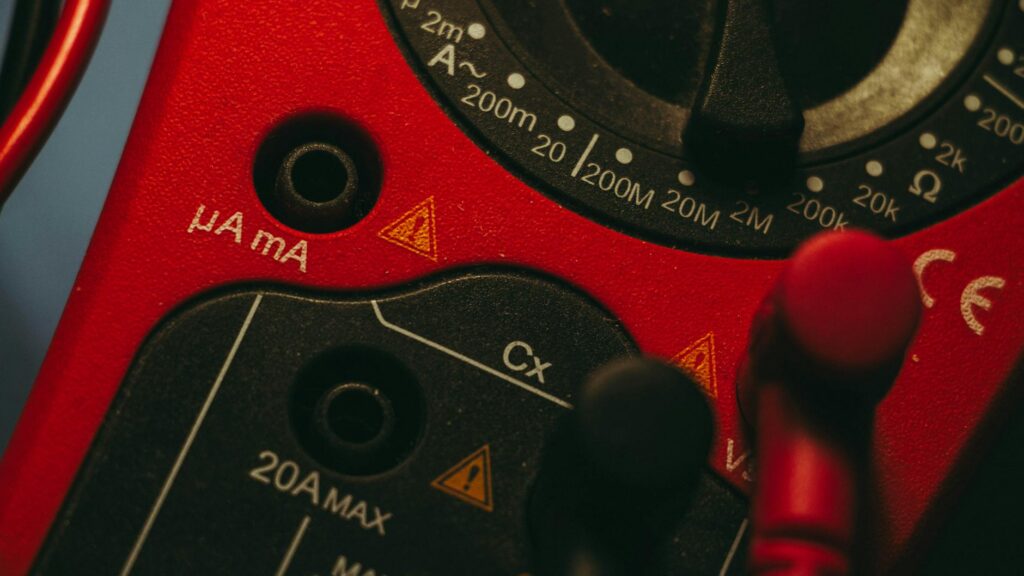
- Digital Multimeter with Voltage Testing — Essential tool for measuring and diagnosing voltage drop issues in electrical systems
- Electrical Wire Gauge and Size Calculator Tool — Directly helps determine proper wire sizing to minimize voltage drop in circuits
- Professional Electrical Testing Equipment — Advanced diagnostic tools for electricians to measure and troubleshoot voltage drop problems in real-world applications
SPONSORED
Estimating Software Built for Electrical Contractors
ArcSite lets you draw site plans, create estimates, and close jobs faster — all from your phone or tablet. Used by 100,000+ field service professionals.
Try ArcSite Free →Affiliate partner — we may earn a commission at no cost to you.