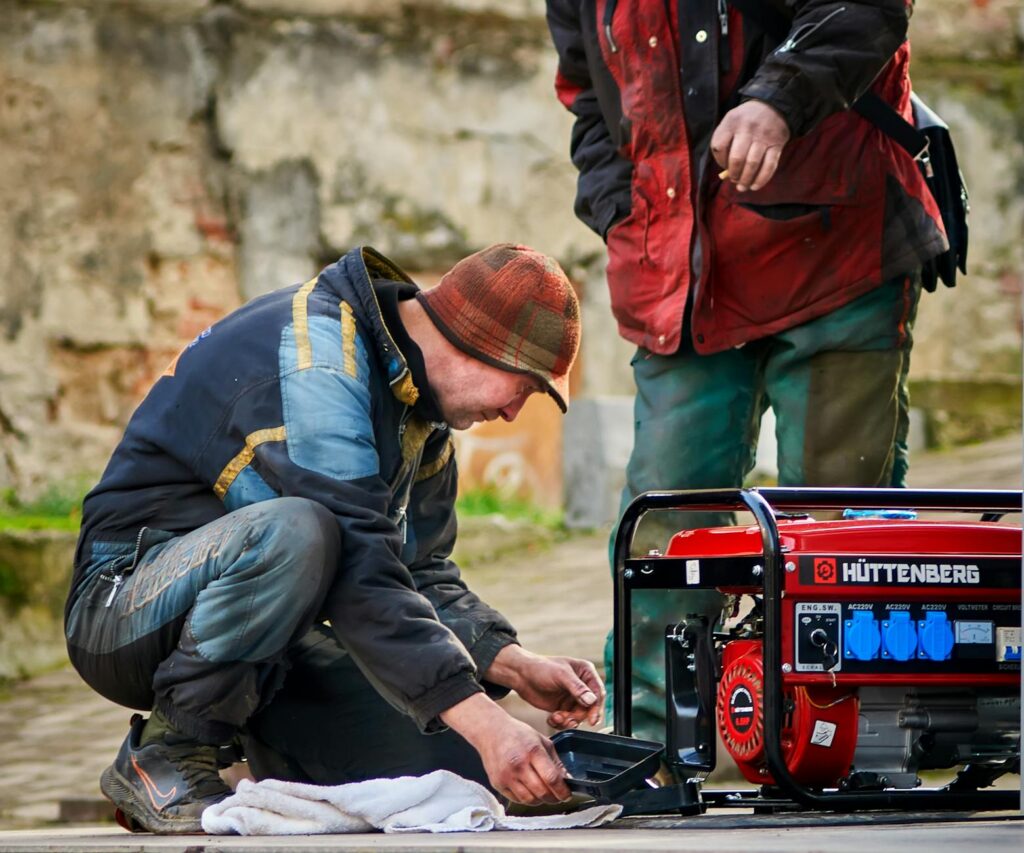
Selecting the right generator size is one of the most critical decisions you’ll make when preparing for power outages or installing a backup power system. An undersized generator will struggle to power essential loads, while an oversized unit wastes money and fuel. In this guide, I’ll walk you through the engineering principles and practical calculations needed to size a generator correctly for your specific situation.
Understanding Load Requirements and Power Calculations
Generator sizing begins with understanding the difference between starting watts and running watts. Starting watts, also called inrush watts, represent the temporary surge of power needed when motors and compressors first energize. Running watts represent the continuous power demand once equipment operates normally. Most household appliances require 2 to 3 times more starting watts than running watts.
To calculate your total load requirement, you need to list every appliance or device you want to power simultaneously. Create a spreadsheet with three columns: appliance name, running watts, and starting watts. For home applications, typical running wattages include:
- Refrigerator: 600-800 watts running, 1,200-2,000 watts starting
- Central air conditioner (5 ton): 3,500-4,500 watts running, 10,000-15,000 watts starting
- Well pump: 800-1,500 watts running, 2,400-4,500 watts starting
- Electric water heater: 4,000-5,500 watts (full load)
- Microwave: 1,000-1,200 watts
- Television: 100-400 watts
- Lighting (whole house LED): 300-600 watts
The National Electrical Code provides guidance on load calculations. According to NEC 220.12, general lighting loads shall be calculated at 3 watts per square foot for residential occupancies. For a 2,000 square foot home, this equals 6,000 watts of lighting load capacity, though you won’t run all lights simultaneously.
Your actual generator size should be based on realistic simultaneous usage. You won’t run your air conditioner, electric water heater, and clothes dryer all at the same time. Calculate your essential loads first, then add loads you’d reasonably want to operate together.
Practical Worked Example: Sizing a Residential Generator
Let’s work through a complete example for a 2,500 square foot suburban home with a family of four. The homeowner wants backup power for essential appliances but doesn’t expect to run air conditioning during an outage.
Step 1: List Essential Loads
- Well pump: 1,200 running watts, 3,600 starting watts
- Refrigerator: 700 running watts, 1,800 starting watts
- Furnace/HVAC fan: 800 running watts, 2,400 starting watts
- Water heater (electric): 4,500 watts (element on demand)
- Lighting: 500 running watts
- Microwave: 1,200 watts (occasional use)
- Television and computer: 400 watts
- Washer and dryer: 5,000 watts combined (occasional)
Step 2: Calculate Simultaneous Load
Assuming realistic usage where the family doesn’t run the electric water heater, washer, and dryer simultaneously with other loads:
Base load (always running): Well pump (1,200) + Refrigerator (700) + Furnace fan (800) + Lighting (500) = 3,200 running watts
Peak load scenario (realistic simultaneous): Base load (3,200) + Microwave (1,200) + Television/computer (400) = 4,800 running watts
Peak starting load: Well pump starting (3,600) + Refrigerator starting (1,800) + Furnace starting (2,400) + Microwave (1,200) + TV/computer (400) = 9,400 starting watts
Step 3: Add Safety Margin
Industry best practice recommends adding 20-25% safety margin to your calculated load. This accounts for voltage drop, future loads, and efficiency losses:
9,400 starting watts × 1.25 = 11,750 starting watts required
Recommendation: A 12,000-watt (12 kW) generator with 9,500-10,000 running watt capacity
This sized generator will handle the simultaneous starting of the well pump, furnace, and other loads with adequate margin. The homeowner can run most appliances without worrying about overload.
Commercial Generator Sizing and Code Compliance
Commercial applications require more rigorous calculations following NEC Article 700 for emergency systems. According to NEC 700.4(b), the emergency power source must have adequate capacity to supply all equipment intended to be operated simultaneously.
For commercial spaces, you must calculate the demand load, not just the sum of all connected loads. This involves applying demand factors based on occupancy type and equipment categories. For example, a medical facility requires different calculations than a retail store.
Commercial generator sizing also considers:
- Single largest motor starting requirement (typically 125% of motor running load)
- HVAC equipment capacity and sequencing
- Elevator emergency operation
- Fire alarm and emergency lighting circuits
- Data center and server room power requirements
- Welding or industrial equipment loads
For commercial applications, engage a licensed electrical engineer to perform load calculations. The engineer will review your electrical plans, equipment specifications, and operational requirements to recommend the correct generator size and any necessary transfer switch equipment.
Frequently Asked Questions
What’s the difference between a portable generator and a standby generator?
Portable generators run on gasoline or propane and must be manually started and connected to your home’s electrical system through a manual transfer switch. Standby generators are permanently installed, run on natural gas or propane, and automatically activate when power fails. Standby units are larger capacity machines designed for whole-home or whole-building backup. For sizing purposes, the calculation method remains the same, but standby generators typically handle larger simultaneous loads more reliably.
Can I use a generator calculator to size my system?
Yes, a quality generator calculator can help you organize your load calculations and arrive at a preliminary recommendation. However, these calculators work best when you input accurate wattage data for your specific appliances. Visit our generator sizing calculator to input your appliance list and receive a recommended generator size. Remember that calculators provide estimates; consult manufacturers’ specifications and an electrician for final sizing decisions.
Do I need to account for voltage drop when sizing a generator?
Yes, voltage drop is important, especially for portable generators or installations with long cable runs. According to NEC 310.15, voltage drop should not exceed 3% on branch circuits or 5% on combined feeder and branch circuits. A 5-10% voltage drop at the generator terminals can reduce available power by the same percentage. If you have a long run from your generator to your home, use heavier gauge cables to minimize this loss, or size your generator slightly larger to compensate.
Conclusion
Properly sizing a generator requires understanding your electrical loads, calculating simultaneous demand realistically, and applying appropriate safety margins. Whether you’re protecting a home or a commercial facility, the fundamental principle remains: match your generator capacity to your actual power needs with adequate capacity for starting surges. Take time to inventory your loads, consult equipment specifications, and when in doubt, involve a qualified electrical professional to ensure your backup power system meets both your needs and applicable electrical codes.
- Westinghouse iGen4500 Portable Generator — A popular mid-range portable generator that readers sizing generators for homes/small businesses would consider purchasing after learning proper sizing calculations
- Kill A Watt EZ Power Meter — Essential tool for measuring actual wattage draw of appliances and loads, helping users accurately calculate their generator sizing needs before purchase
- Generac PWRcell Modular Battery System — Complements generator sizing guidance by offering battery backup storage solutions for home/business backup power systems
Related: Battery Backup vs Whole-Home Generator: Cost & Coverage
SPONSORED
Estimating Software Built for Electrical Contractors
ArcSite lets you draw site plans, create estimates, and close jobs faster — all from your phone or tablet. Used by 100,000+ field service professionals.
Try ArcSite Free →Affiliate partner — we may earn a commission at no cost to you.