Choosing the right wire gauge is one of the most critical decisions in any electrical project, whether you’re wiring a new home, installing a subpanel, or running power to a workshop. Using undersized wire creates serious fire hazards and voltage drops that damage equipment. Oversized wire wastes money and makes installation unnecessarily difficult. A wire gauge calculator removes the guesswork and ensures you select the exact wire size your circuit needs based on amperage, distance, and voltage.
This comprehensive guide explains how wire gauge calculations work, why they matter, and how to use a calculator effectively for both residential and industrial applications.
Understanding Wire Gauge and Ampacity Basics
Wire gauge refers to the diameter and cross-sectional area of a conductor, measured in AWG (American Wire Gauge). Counterintuitively, smaller numbers mean thicker wires. For example, 14 AWG copper wire has a diameter of about 0.064 inches, while 4 AWG measures 0.204 inches across. Thicker wires conduct electricity more efficiently and can safely carry larger amounts of current without overheating.
Ampacity is the maximum current a wire can carry continuously without exceeding a safe temperature limit. The National Electrical Code (NEC) specifies ampacity ratings based on wire gauge, insulation type, and installation method. A 12 AWG copper wire with 60°C insulation can safely carry 20 amps in a conduit, but the same wire at 90°C rating carries 25 amps. Using a wire rated for only 15 amps on a 20-amp circuit is dangerous—the wire heats up, insulation breaks down, and fire risk increases dramatically.
A wire gauge calculator automates these NEC lookups and instantly tells you if your chosen wire is safe for your specific circuit demands.
How Wire Distance Affects Gauge Requirements
Distance matters just as much as amperage. Current flowing through a conductor creates resistance, which causes voltage drop. If you run a 20-amp circuit 100 feet on undersized wire, voltage may drop 5 percent or more by the time it reaches your equipment. This reduced voltage causes motors to run hot, lights to dim, and power tools to perform poorly.
The NEC recommends keeping voltage drop to 3 percent on branch circuits and 5 percent on combined feeder and branch circuits. A 120-volt circuit should lose no more than 3.6 volts over the run; a 240-volt circuit should lose no more than 7.2 volts. For long runs, you may need to jump up two or three gauge sizes compared to a short circuit at the same amperage.
Consider this example: A 30-amp circuit running 50 feet typically requires 8 AWG copper wire. At 100 feet, the same circuit needs 6 AWG. At 150 feet, you’d need 4 AWG. A wire gauge calculator accounts for distance automatically, preventing the costly mistake of undersizing wire on extended runs.
Key Factors Your Wire Gauge Calculator Should Include
An effective wire gauge calculator asks for several essential inputs to deliver accurate results. The most important are amperage (the circuit load in amps), circuit voltage (120V, 240V, 277V, or 480V), wire length (one-way distance in feet from breaker to endpoint), wire type (typically copper or aluminum), and installation method (conduit, in-wall, or buried).
Advanced calculators also let you specify insulation temperature rating (60°C, 75°C, or 90°C), which affects ampacity. A 10 AWG wire at 60°C handles 30 amps, but at 90°C it handles 40 amps. Selecting the appropriate rating prevents both under- and over-sizing.
Some calculators compute voltage drop percentage so you can see exactly how much voltage your circuit loses. This is invaluable for troubleshooting dim lights or weak equipment performance. The best calculators also show cost comparisons, displaying the price difference between using 12 AWG versus 10 AWG for your run, helping you balance safety with budget constraints.
Step-by-Step Guide to Using a Wire Gauge Calculator
Using a wire gauge calculator requires just five minutes and minimal information. First, determine your circuit amperage by checking the breaker size or calculating watts divided by voltage (amps = watts ÷ volts). A 2,400-watt electric heater on 240V draws 10 amps. Second, measure the distance in feet from your breaker panel to the farthest point on the circuit. Remember to count the actual wire run—up the wall, across the attic, down into the wall—not just the straight-line distance.
Third, select your wire type: copper is more conductive and costs 20-30 percent more than aluminum but has higher ampacity ratings. Aluminum wire isn’t recommended for residential circuits under 100 amps due to connection issues and lower capacity. Fourth, choose insulation rating. Most new installations use 90°C (THHN/THWN-2) wire, which offers flexibility and lowest cost. Fifth, click calculate.
The calculator instantly returns the minimum wire gauge, ampacity at various temperature ratings, voltage drop percentage, and typical material costs. Most also highlight whether your chosen size meets NEC requirements. If voltage drop exceeds 3 percent, the calculator recommends upsizing.
Common Wire Gauge Scenarios and Solutions
Understanding typical gauge recommendations prevents on-site surprises. Standard residential circuits use 14 AWG (15 amps) for lighting and 12 AWG (20 amps) for outlets. Large appliances like ranges, water heaters, and HVAC systems typically need 6 AWG to 2 AWG depending on amperage. A 50-amp subpanel feed from the main panel might require 6 AWG copper at distances under 100 feet but jumps to 4 AWG beyond that.
Outdoor runs present special challenges because distance combines with NEC requirements for underground burial depth and conduit protection. A 30-amp circuit to a detached garage 200 feet away might need 2 AWG wire in conduit—a six-fold jump from typical indoor circuits. Running 12 AWG wire that distance would drop voltage excessively and risk fire. A wire gauge calculator prevents these expensive miscalculations.
Industrial three-phase circuits at 480V can use smaller wire than equivalent single-phase 240V circuits because voltage is distributed differently. A 100-amp 480V three-phase feeder might use 4 AWG, while a 100-amp 240V single-phase feeder requires 1 AWG. Understanding these nuances requires referring to detailed NEC tables—or simply entering your specifications into a calculator.
Frequently Asked Questions
What happens if I use wire that’s too small?
Undersized wire heats up because it has higher resistance than necessary. The insulation can melt, wires can short to ground or each other, and fire risk increases substantially. A 15-amp wire on a 20-amp circuit operating at full load will exceed safe temperature limits within hours. You might not notice the problem until smoke appears or a fire starts.
Can I use aluminum wire instead of copper?
Aluminum wire is cheaper but has lower ampacity—an aluminum wire carrying the same current as copper heats up more. Aluminum also suffers from oxidation and connection loosening over time. The NEC permits aluminum for large feeders (100+ amps) but strongly discourages it for circuits under 100 amps, especially at residential services where it’s been linked to connection fires.
How do I measure circuit distance accurately?
Measure the actual path the wire will travel, not the straight-line distance. If wire runs up a wall 10 feet, across an attic 30 feet, and down another wall 8 feet, your distance is 48 feet. Include extra length for connections at breakers and fixtures. Using a measuring wheel makes long runs easier than a tape measure.
What’s the difference between 60°C, 75°C, and 90°C insulation?
These ratings indicate the maximum temperature the insulation can withstand continuously. 90°C insulation (THHN/THWN-2) allows higher ampacity than 60°C (TW) insulation on the same wire gauge and costs slightly more. Most electricians use 90°C wire because it provides safety margin and better long-term reliability at minimal cost difference.
Should I always use the minimum wire gauge the calculator recommends?
The calculator returns the minimum safe size per NEC code, but many electricians recommend upsizing one or two gauges for future expansion and reduced voltage drop. The cost difference between 12 AWG and 10 AWG copper is only $15-25 per 100 feet, a worthwhile insurance policy against needing rewiring later as your electrical demands grow.
Conclusion
Proper wire sizing is non-negotiable in electrical work. Using a wire gauge calculator eliminates dangerous guesswork, ensures NEC compliance, prevents voltage drop problems, and typically saves money by preventing costly mistakes. Whether you’re a homeowner adding a circuit or a contractor designing a new building, accurate wire sizing protects safety and equipment lifespan.
The calculator’s speed and accuracy also make your estimates and timelines more reliable. Instead of spending 20 minutes consulting NEC tables and doing math, you get instant answers that you can trust. As electrical codes evolve and projects grow more complex, having a reliable tool becomes increasingly valuable.
Use Our Free Electrical Calculator
Stop wasting time looking up wire gauge tables manually. Head to our free electrical calculator at electricalcalcpro.com and enter your amperage, distance, and voltage in seconds. You’ll instantly see the exact wire gauge required, voltage drop percentage, cost comparisons between wire sizes, and confirmation of NEC compliance. Our calculator handles residential 120V/240V circuits, commercial three-phase systems
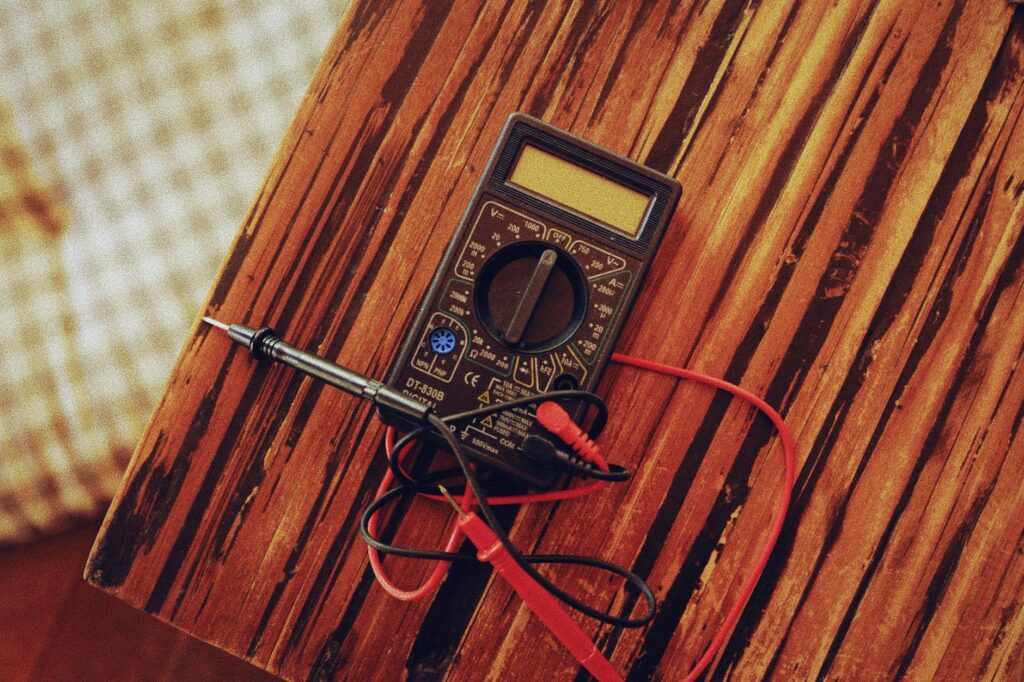
- Digital Wire Gauge and Electrical Testing Multimeter — Essential tool for verifying wire gauge selection and testing electrical circuits during installation projects
- Electrical Wire Assortment Kit — Practical complement to wire sizing knowledge, providing common gauges (12, 14, 10 AWG) for various household and workshop projects
- Wire Stripper and Crimper Tool Set — Necessary tool for properly preparing and terminating correctly-sized wires after calculation and selection
Related: Wire Gauge Calculator: Your Complete Guide to Sizing Electrical Wire Correctly
Related: Dishwasher Electrical Requirements: Dedicated Circuit and Wire Sizing
Related: Wire Gauge Calculator: The Complete Guide to Sizing Electrical Wire Correctly
SPONSORED
Estimating Software Built for Electrical Contractors
ArcSite lets you draw site plans, create estimates, and close jobs faster — all from your phone or tablet. Used by 100,000+ field service professionals.
Try ArcSite Free →Affiliate partner — we may earn a commission at no cost to you.