Wire gauge and amperage ratings are directly connected—the thicker your wire (lower gauge number), the more current it safely carries. This relationship is governed by NEC Article 310.15(B)(16), which provides ampacity tables that electricians and homeowners must follow to prevent overheating and fire hazards. Understanding these ratings ensures your electrical system operates safely and meets code requirements.
Understanding Wire Gauge and Ampacity Basics
Wire gauge refers to the diameter of a conductor, measured in AWG (American Wire Gauge). The AWG system works inversely: a 10 AWG wire is thicker than a 12 AWG wire, and a 14 AWG is thinner still. This matters because cross-sectional area directly affects how much electrical current a wire can safely handle without excessive heat generation.
Ampacity is the maximum current a conductor can carry continuously without exceeding its insulation’s temperature rating. For example, a 12 AWG copper wire in a 60°C environment can safely handle 20 amperes, but the same wire rated at 90°C can handle 30 amperes. The difference comes down to insulation type—THHN (heat-resistant) allows higher ampacity than NM (Romex) cable.
These ratings aren’t arbitrary. The NEC establishes ampacity tables based on extensive testing that accounts for:
- Conductor material (copper vs. aluminum)
- Insulation temperature rating
- Ambient air temperature
- Number of conductors in a raceway
- Voltage drop considerations
Undersizing wire creates dangerous conditions. A 14 AWG wire carrying 25 amps will overheat, potentially melting insulation and causing fires. Conversely, oversizing wire wastes money without safety benefit—a 6 AWG wire carrying 15 amps works safely but is unnecessarily expensive.
Copper vs. Aluminum Ampacity Ratings
Copper and aluminum conductors have different ampacity ratings at identical gauges because copper has superior electrical conductivity. According to NEC Article 310.15(B)(16), a 10 AWG copper conductor rated at 90°C carries 40 amperes, while a 10 AWG aluminum conductor at 90°C carries only 32 amperes.
This difference becomes more pronounced at smaller gauges. Here’s a quick reference table for common residential applications:
| Wire Gauge (AWG) | Copper 60°C (THWN) | Copper 90°C (THHN) | Aluminum 60°C (THWN) | Aluminum 90°C (THHN) | Common Use |
|---|---|---|---|---|---|
| 14 | 15A | 20A | N/A | N/A | Lights, Switches |
| 12 | 20A | 30A | N/A | N/A | Kitchen, Bath Outlets |
| 10 | 30A | 40A | N/A | 32A | Range, Dryer, Subpanel |
| 8 | 40A | 55A | 35A | 45A | Main Service, Heavy Loads |
| 6 | 55A | 75A | 50A | 60A | Main Service, Subpanel |
| 4 | 70A | 95A | 65A | 85A | Service Entrance, Feeders |
| 2 | 95A | 130A | 90A | 120A | Service Entrance, Feeders |
Note: Aluminum conductors are rarely used in residential wiring below 8 AWG due to code restrictions and installation complexity. The 60°C and 90°C ratings refer to the insulation temperature rating, not the environment temperature.
When selecting between copper and aluminum, remember that aluminum requires special handling. Connection points need antioxidant compound, and terminations must be rated for aluminum. This added complexity is why most residential electricians prefer copper despite its higher cost.
Practical Wire Gauge Selection Guide
Choosing the correct wire gauge involves three steps: determine the circuit amperage, identify your insulation rating, and consult the appropriate ampacity table.
Step 1: Determine Circuit Amperage
This comes from your breaker rating. A 15-amp circuit needs 14 AWG or larger. A 20-amp circuit needs 12 AWG or larger. A 30-amp circuit needs 10 AWG copper (or 8 AWG aluminum). Never upsize the wire to match a larger breaker—always match wire to the breaker protecting it.
Step 2: Account for Derating Factors
If you’re running more than three current-carrying conductors in the same conduit, you must derate the ampacity (reduce the allowed current). For example, if four wires share one conduit, apply an 80% derating factor. A 20-amp wire becomes effectively 16 amps usable capacity. This requirement is found in NEC Table 310.15(B)(3)(a).
Step 3: Consider Voltage Drop
For long runs—like from a main panel to a detached garage—voltage drop becomes important. Even though wire might handle the current ampacity-wise, excessive voltage drop causes appliances to operate poorly. The NEC recommends voltage drop not exceed 3% on branch circuits or 5% combined. This often requires oversizing wire beyond the ampacity minimum.
How to Use the Ampacity Calculator
While tables provide reference values, a dedicated wire ampacity calculator helps you quickly determine proper sizing for your specific conditions. Input your wire gauge, insulation type, number of conductors, and ambient temperature—the calculator instantly shows whether your selection meets code and your needs.
This eliminates guesswork and ensures you’re selecting safe, code-compliant wire every time. Calculators also help contractors bid jobs accurately and double-check field decisions before wire is installed.
Frequently Asked Questions
Can I use a smaller wire gauge if I run it in conduit?
No. Conduit protects wire from physical damage and can help with heat dissipation, but it doesn’t change the ampacity rating itself. The NEC ampacity tables already account for typical conduit installation. However, if you’re bundling multiple circuits in one conduit, you must derate the ampacity, meaning you’d need larger wire, not smaller.
Why does aluminum
Recommended Resources:
- Digital Wire Gauge Measurement Tool — Directly complements the post by allowing users to measure actual wire gauges accurately when selecting proper amperage ratings
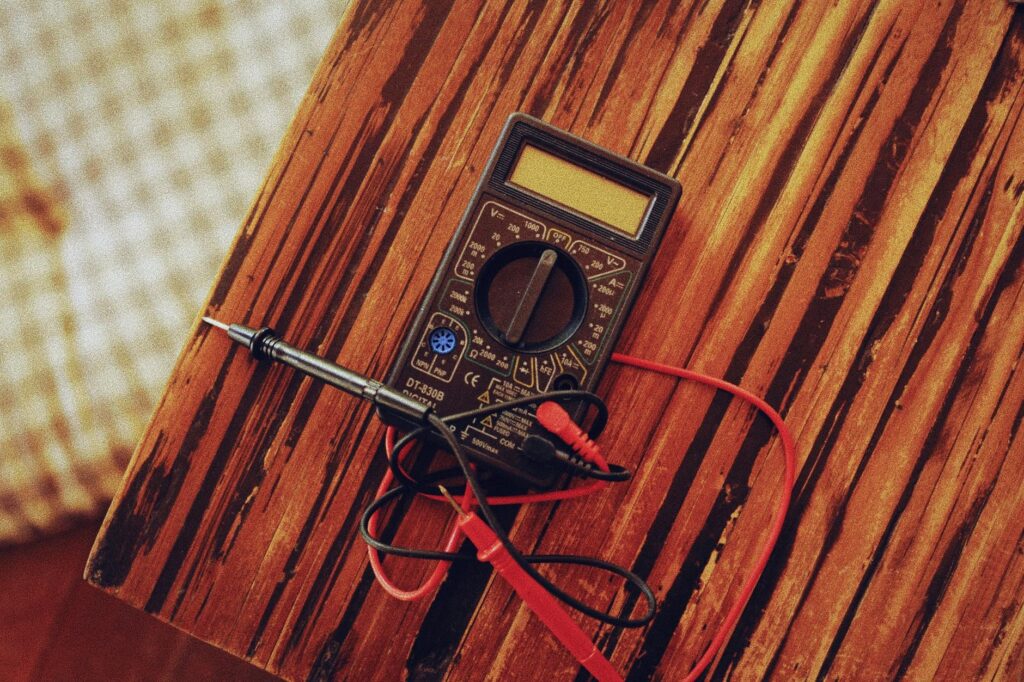
- Electrical Safety Testing Multimeter — Essential tool for electricians and homeowners to verify amperage and ensure compliance with NEC codes discussed in the article
- NEC Code Reference Guide (2023 Edition) — Provides the complete NEC Article 310.15(B)(16) standards referenced in the post for thorough understanding of ampacity requirements
- Digital Wire Gauge Measurement Tool — Directly complements the post by allowing users to measure actual wire gauges accurately when selecting proper amperage ratings
- Electrical Safety Testing Multimeter — Essential tool for electricians and homeowners to verify amperage and ensure compliance with NEC codes discussed in the article
- NEC Code Reference Guide (2023 Edition) — Provides the complete NEC Article 310.15(B)(16) standards referenced in the post for thorough understanding of ampacity requirements
See also: Electrical Wiring Colors: US vs International Standards
SPONSORED
Estimating Software Built for Electrical Contractors
ArcSite lets you draw site plans, create estimates, and close jobs faster — all from your phone or tablet. Used by 100,000+ field service professionals.
Try ArcSite Free →Affiliate partner — we may earn a commission at no cost to you.