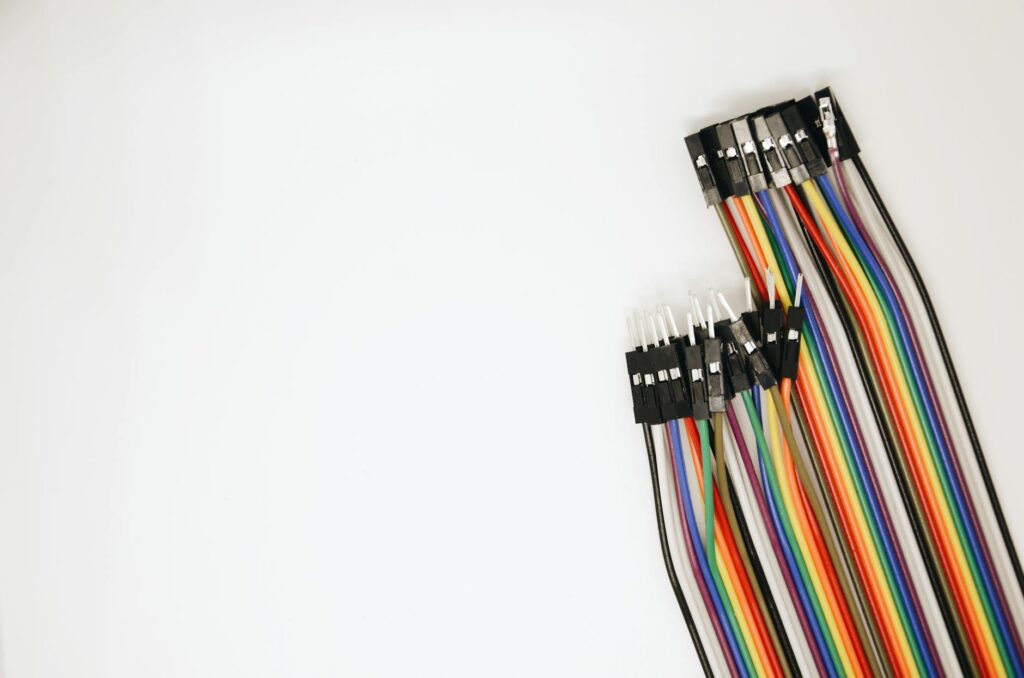
Electrical wiring colors serve as a universal safety language, helping electricians quickly identify circuit functions and voltage levels. However, the color coding standards differ significantly between the United States and international systems, which can create confusion when working on projects or importing equipment. Understanding these differences is essential for any electrician, DIYer, or facility manager. (Related: GFCI vs AFCI vs Standard Breakers: A Complete Guide) (Related: Wire Gauge Chart: Amperage Ratings for Copper & Aluminum) (Related: Ohm’s Law Calculator: The Complete Guide to Voltage, Current, and Resistance Calculations)
US Electrical Wiring Color Standards
The National Electrical Code (NEC) establishes the wiring color requirements in the United States. These standards ensure consistency and safety across residential, commercial, and industrial installations.
Single-Phase AC Circuits (120/240V):
- Hot wires: Black and red (for two hot wires in 240V applications)
- Neutral: White
- Ground: Bare copper or green
Three-Phase AC Circuits:
- Phase A: Black
- Phase B: Red
- Phase C: Blue
- Neutral: White
- Ground: Bare copper or green
In the US system, black and red are universally recognized as “hot” wires carrying voltage. White is always neutral, never used for any other purpose. Bare copper or green indicates the ground wire, which provides a safety path for fault currents. Some jurisdictions allow gray for neutral in specific industrial applications, but white remains the standard.
The NEC also permits white or gray wires to be re-identified as hot conductors in certain situations, but this requires permanent markings like electrical tape or sleeves at both ends of the conductor.
International Electrical Wiring Color Standards
Most countries outside North America follow IEC 60083, an international standard that uses different color combinations. These standards are prevalent in Europe, Asia, Africa, and Australia.
Single-Phase AC Circuits (230V):
- Hot (Phase): Brown
- Neutral: Light blue
- Ground/Earth: Green or green-yellow striped
Three-Phase AC Circuits:
- Phase A: Brown
- Phase B: Black
- Phase C: Gray
- Neutral: Light blue
- Ground/Earth: Green or green-yellow striped
The international standard uses brown for all hot phases in single-phase applications, making it instantly recognizable. Light blue (not white) designates the neutral conductor. The distinctive green-yellow stripe pattern for ground provides clear visual differentiation from all other conductors. This color scheme reflects the higher standard voltage (230V) commonly used internationally compared to US residential standards (120V).
Key Differences and Safety Implications
The most significant differences between US and international standards create potential safety hazards when systems are mixed. A white wire in US systems is neutral, but in international systems, white doesn’t appear in the standard color code at all. This distinction is critical because misidentifying a neutral as a ground wire—or vice versa—can create shock hazards and circuit faults.
Voltage Considerations: The US typically uses 120V/240V, while international standards accommodate 230V/400V systems. These voltage differences influenced the color selections, as brown stands out better for higher voltage applications.
Historical Context: US standards developed independently during early electrical infrastructure buildout, while international standards evolved to create consistency across multiple countries with different languages and electrical traditions.
Practical Safety Rules:
- Never assume wire colors when working on imported equipment or in multinational facilities
- Always use a voltage tester to verify which conductors carry voltage
- Consult local electrical codes and manufacturer documentation
- Label circuits clearly in mixed-standard environments
- When in doubt, treat any wire as potentially live until proven otherwise with proper testing
The consequence of mixing standards without proper identification can be severe. An electrician familiar only with US standards might incorrectly connect equipment designed for international standards, creating fire or electrocution risks. Facility managers overseeing multiple locations across different countries must establish clear labeling protocols.
How to Use Our Electrical Calculator
When planning electrical installations across different voltage systems or determining proper wire sizing for circuits with varying standards, our wire size calculator helps you determine the correct gauge for your specific application. Simply input your voltage, amperage, and circuit length to get accurate recommendations that comply with relevant electrical codes, whether you’re working in US or international contexts.
Frequently Asked Questions
Can I use international-colored wires in US installations?
Technically, no. The NEC specifically requires black/red for hot, white for neutral, and bare copper/green for ground in US installations. Using brown or light blue wires would violate the National Electrical Code and create confusion during inspections and future maintenance. All wiring must comply with local code requirements. If you receive equipment with international colors, you must either re-wire it to US standards or clearly document the non-standard colors with permanent labels.
Why does the US use black instead of brown for hot wires?
The black color choice for US hot wires developed organically during the early days of electrical infrastructure. When the NEC was first standardized in 1897, black was a practical choice for rubber-insulated cables. International standards evolved separately, and brown was selected as a more visible color for higher voltage systems common in Europe and other regions. By the time standardization discussions became international, both regions had decades of established practice, making change impractical.
Are there any exceptions to wiring color standards?
Yes, a few exceptions exist. DC circuits don’t follow standard color codes; they typically use red for positive and black for negative. Industrial control circuits sometimes use different colors. Older installations predating current codes may not follow modern standards. Temporary or industrial worksites might use colored tape for identification. However, all new permanent installations must follow the established code for the jurisdiction where they’re located. Always consult local electrical inspectors about permissible exceptions.
Ray Kowalski is a electrical writer with 20+ years of experience helping professionals and homeowners understand electrical safety standards and best practices.
- Electrical Wire & Cable Tester Kit — Professionals and DIYers working with different wiring standards need reliable testing tools to verify wire colors and identify circuits safely
- Electrical Safety Handbook & Reference Guide — Readers comparing US vs international standards benefit from comprehensive references that document color coding requirements and safety regulations
- Professional Wire Color Labeling & Tape Kit — Essential for electricians managing mixed wiring systems or projects involving international equipment to ensure proper identification and compliance
SPONSORED
Estimating Software Built for Electrical Contractors
ArcSite lets you draw site plans, create estimates, and close jobs faster — all from your phone or tablet. Used by 100,000+ field service professionals.
Try ArcSite Free →Affiliate partner — we may earn a commission at no cost to you.