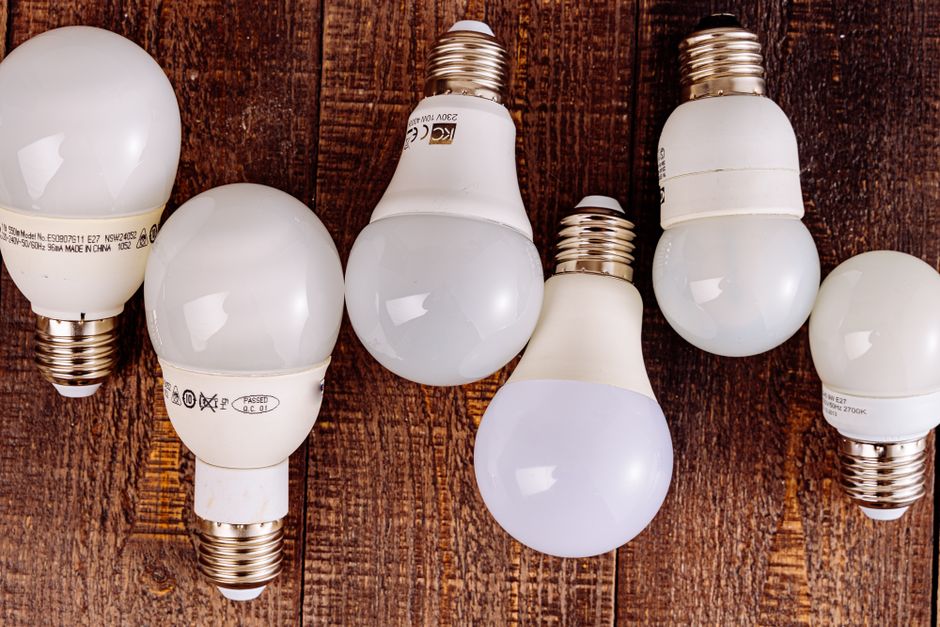
LED bulbs use 75–80% less wattage than incandescent equivalents while producing the same light output measured in lumens. A 10-watt LED replaces a 60-watt incandescent. For circuit load calculations, always use the LED’s actual wattage — not the incandescent equivalent — to accurately size breakers, wiring, and lighting circuits. (Related: Wind turbine electrical systems: NEC code requirements and calculations for wind energy installations) (Related: EV Charger Installation Cost: Full Breakdown for 2025) (Related: Ohm’s Law Calculator: Complete Guide to Understanding Voltage, Current, and Resistance) (Related: Complete Guide to Arc Fault Circuit Interrupter Breakers in 2026) (Related: Electrical Panel Upgrade Cost: What to Budget in 2025) (Related: Power Factor in Commercial Electrical Systems: 5 Proven Ways to Cut Costs in 2026)
Understanding Watt Equivalency: What the Labels Actually Mean
Walk into any hardware store and you’ll see LED packaging that reads “60W equivalent” — but the bulb itself only draws 8–10 watts. That number on the front of the box is a marketing reference point tied to lumens (light output), not electrical consumption. For anyone planning a lighting circuit, this distinction is critical.
The Lumen-to-Watt Relationship
Incandescent bulbs convert roughly 90% of their energy into heat and only about 10% into visible light, making them extraordinarily inefficient. LEDs flip that ratio dramatically. Here’s how the equivalency chart breaks down for standard household applications:
- 40W incandescent → 450 lumens → 6W LED equivalent
- 60W incandescent → 800 lumens → 8–10W LED equivalent
- 75W incandescent → 1,100 lumens → 11–13W LED equivalent
- 100W incandescent → 1,600 lumens → 14–17W LED equivalent
- 150W incandescent → 2,600 lumens → 22–25W LED equivalent
The takeaway for electrical planning: when someone says they’re “replacing 60-watt bulbs,” your load calculation should be based on the 8–10 watt actual draw, not the 60-watt incandescent figure. Using the wrong number leads to either over-specified wiring that wastes money or under-specified circuits that create safety hazards.
Why This Matters Beyond Energy Savings
Heat output from incandescent bulbs adds real thermal load to a space, which affects HVAC sizing and can create fire risks near insulation. LEDs run significantly cooler, which also makes them safer for enclosed fixtures, recessed cans, and junction boxes where heat accumulation has historically been a concern.
Load Calculations for LED Lighting Circuits: A Practical Methodology
The National Electrical Code (NEC) requires that lighting branch circuits be calculated at their actual connected load. When you’re working with LEDs, the wattage values are dramatically lower than legacy incandescent installations, and that changes how you size circuits.
Standard Branch Circuit Load Calculation
For a 15-amp, 120-volt lighting circuit, the maximum continuous load is 80% of the breaker rating — a safety factor required by NEC Article 210. That gives you:
- 15A circuit: 15A × 120V × 0.80 = 1,440 watts maximum continuous load
- 20A circuit: 20A × 120V × 0.80 = 1,920 watts maximum continuous load
With incandescent bulbs at 60 watts each, a 15-amp circuit could safely handle 24 fixtures before hitting the 80% threshold. Replace those same fixtures with 9-watt LED equivalents, and that same circuit can now handle 160 fixtures — though in practice, you’d consolidate circuits and reduce your overall wiring cost significantly.
Retrofit Scenarios and Circuit Consolidation
When retrofitting an existing home from incandescent to LED, contractors often find they can consolidate two or three existing lighting circuits into one. This is worth mapping out carefully before starting a project. A house with six dedicated 15-amp lighting circuits running incandescent loads might only need two or three circuits after an LED upgrade — freeing panel space for other loads like EV chargers or kitchen appliances.
To perform the calculation properly:
- List every fixture on the circuit and its actual LED wattage
- Sum the total wattage
- Divide by the circuit voltage (120V) to get amperage
- Confirm the draw stays at or below 80% of the breaker rating
- Factor in any non-lighting loads sharing the circuit (fans, dimmers, smart switches)
Dimmer Compatibility and Power Factor Considerations
LEDs introduce a variable that incandescents never had: power factor. Low-quality LED drivers can have power factors as low as 0.5, meaning the circuit draws more apparent power than the watts rating suggests. For large commercial LED installations, this becomes a real design factor. For residential circuits with fewer than 20 LED fixtures, the impact is typically negligible, but it’s worth specifying LED drivers with a power factor above 0.9 for any commercial or multi-family project. Also verify that dimmers are rated for LED loads — older incandescent dimmers can cause flickering, buzzing, and premature LED failure.
Circuit Planning for New Construction and Major Renovations
If you’re planning new construction or a major renovation in 2026, designing around LED loads from the start gives you opportunities to right-size the electrical system and avoid overbuilding. According to OSHA’s electrical safety standards, circuits must be properly sized and protected for their intended loads — a requirement that applies whether you’re installing 10-watt LEDs or 100-watt incandescents.
Practical Circuit Planning Guidelines
- Residential general lighting: Plan for 3 watts per square foot as a starting load estimate, then adjust based on actual fixture specs
- Kitchen task lighting: Budget 5–7 watts per linear foot of under-cabinet LED strip lighting
- Outdoor LED fixtures: Include 25% spare capacity for future additions
- Commercial spaces: Use actual fixture schedules and manufacturer data sheets for every luminaire
The NEC’s general lighting load calculation in Article 220 uses 3 VA per square foot as a baseline for dwelling units — a figure worth knowing when pulling permits or submitting electrical plans for review.
How to Use the Load Calculator
Running these numbers by hand works fine for simple projects, but for multi-circuit planning or larger renovations, a dedicated tool saves time and reduces errors. The Electrical Load Calculator at ElectricalCalcPro.com lets you input actual fixture wattages, specify circuit voltages, and instantly see whether your planned circuits stay within the NEC’s 80% continuous load threshold. It’s especially useful when comparing an existing incandescent layout against a proposed LED retrofit to visualize the load reduction and identify consolidation opportunities.
Frequently Asked Questions
Do I use the LED wattage or the incandescent equivalent wattage for load calculations?
Always use the LED’s actual wattage — the number printed in the specifications, not the incandescent equivalent listed on the packaging. The equivalent number is a brightness reference, not an electrical measurement. Using it for load calculations will result in a wildly inflated amperage estimate.
Can I put more LED fixtures on a circuit than the original incandescent design allowed?
Yes, but verify the circuit wiring
- Kill A Watt Electricity Usage Monitor — Allows users to measure actual wattage consumption of LED vs incandescent bulbs in their own homes, directly supporting the post’s circuit planning calculations
- LED Bulb Variety Pack (Multiple Wattages) — Helps readers practically test and compare LED wattage equivalents mentioned in the guide for different lighting applications
- Digital Clamp Meter for Circuit Testing — Essential tool for electricians and DIYers to verify actual circuit loads when planning lighting circuits with accurate wattage readings
See also: Voltage Drop Calculator: The Complete Guide to Sizing Wiring Correctly
See also: Wire Gauge Calculator: Your Complete Guide to Sizing Electrical Wires Correctly
SPONSORED
Estimating Software Built for Electrical Contractors
ArcSite lets you draw site plans, create estimates, and close jobs faster — all from your phone or tablet. Used by 100,000+ field service professionals.
Try ArcSite Free →Affiliate partner — we may earn a commission at no cost to you.