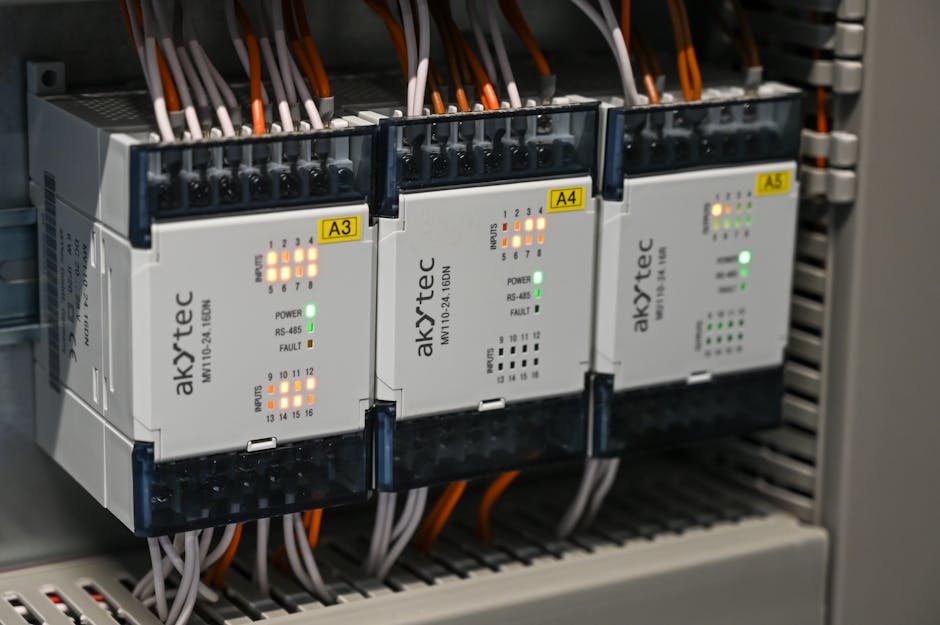
GFCI breakers protect against ground faults that cause electric shock by detecting current leakage to ground. AFCI breakers protect against arc faults that cause electrical fires by detecting dangerous arcing in wiring. Standard breakers only protect against overloads and short circuits. Each type serves a distinct, code-required purpose in modern residential electrical systems. (Related: How Revit 2026 Conductor Tools Integrate with NEC Code Compliance and Electrical Design Calculations) (Related: Amperage Calculator: Size Wire & Breakers the Right Way) (Related: Complete Electrical Panel Labeling System Guide for 2026) (Related: Complete Guide to NFPA 70 National Electrical Code (NEC): Key Requirements, Updates, and Practical Applications for Electricians) (Related: Transformer Sizing Guide: How to Pick the Right KVA Rating) (Related: Ohm’s Law Calculator: The Complete Guide to Electrical Calculations)
Understanding the Three Types of Circuit Protection
Choosing the wrong breaker type isn’t just a code violation — it can cost lives. The 2023 NEC (National Electrical Code) clearly defines where each protection type is required, and those requirements continue to expand with each code cycle heading into 2026.
Standard Breakers: The Baseline
Standard thermal-magnetic circuit breakers have one job: interrupt the circuit when current exceeds the rated amperage or when a hard short circuit occurs. A 20-amp breaker trips at sustained overloads and near-instantaneous faults in the thousands of amps range.
What standard breakers cannot detect is a small, sustained current leakage — say, 30–50 milliamps flowing through a person to ground. That’s well below the trip threshold but more than enough to cause ventricular fibrillation. They also cannot detect the intermittent, low-level arcing that slowly ignites insulation over weeks before a fire starts.
GFCI Protection: Shock Prevention
Ground Fault Circuit Interrupter devices monitor the difference in current between the hot and neutral conductors. Under normal conditions, these two values are equal. When current finds an unintended path to ground — through a person, through water, through a damaged appliance — the GFCI detects an imbalance as small as 4–6 milliamps and trips within 1/40th of a second.
According to OSHA’s electrical safety guidelines, ground faults are a leading cause of electrical fatalities in the workplace, and GFCI protection is required in wet, damp, or outdoor environments. The same principle applies in residential settings under NEC Article 210.8, which mandates GFCI protection in:
- Bathrooms, kitchens within 6 feet of a sink, and laundry areas
- Garages, crawl spaces, and unfinished basements
- Outdoor receptacles and boathouses
- All 15A and 20A receptacles in crawl spaces and near swimming pools
GFCI protection can be provided at the receptacle level (the familiar outlet with TEST/RESET buttons) or at the breaker panel using a GFCI circuit breaker, which protects the entire circuit.
AFCI Protection: Fire Prevention
Arc Fault Circuit Interrupters use sophisticated electronics to analyze the waveform of current flowing through the circuit. They’re looking for the signature of dangerous arcing — the kind produced by a nail through a wire, a pinched cord under furniture, or deteriorated insulation on aging wiring.
These arcs typically involve only 3–5 amps, which a standard breaker ignores completely. But the heat generated by sustained arcing can exceed 10,000°F and easily ignite surrounding wood framing, insulation, and drywall.
NEC Article 210.12 requires AFCI protection for virtually all 120V, 15A and 20A circuits in dwelling units, including:
- All bedrooms, living rooms, dining rooms, and hallways
- Kitchens, laundry areas, and sunrooms (added in recent NEC cycles)
- Dormitory units and hotel guest rooms
Combination-type AFCI breakers — the standard now required by NEC — protect against both series arcs (in the circuit wiring) and parallel arcs (line-to-neutral or line-to-ground), providing comprehensive coverage.
GFCI vs AFCI: Key Differences Side by Side
Understanding how these technologies differ helps you specify the right protection and troubleshoot nuisance tripping effectively.
| Feature | Standard Breaker | GFCI Breaker | AFCI Breaker |
|---|---|---|---|
| Protects Against | Overloads, short circuits | Ground faults (shock) | Arc faults (fire) |
| Trip Threshold | 100–135% rated current | 4–6 milliamps leakage | Arc signature detection |
| Response Time | Variable (seconds to minutes) | 1/40th of a second | Near-instantaneous |
| NEC Requirement | All circuits | Wet/damp locations | Most living spaces |
| Typical Cost | $5–$15 | $35–$60 | $35–$65 |
Note that dual-function AFCI/GFCI combination breakers are now widely available and cost $50–$80. For circuits in kitchens and laundry rooms — where both protections are required — these combination units are the most code-efficient solution.
Before specifying breakers for a new panel or service upgrade, use our circuit breaker sizing calculator to confirm the correct amperage rating for each circuit before selecting the appropriate protection type.
How to Use the Calculator
Proper breaker selection starts with accurate load calculations. Undersized breakers cause nuisance tripping; oversized breakers fail to protect wiring from overheating. Our tools take the guesswork out of the math.
Step 1: Navigate to the electrical load calculator and enter the connected load for your circuit — including all outlets, fixtures, and hard-wired appliances.
Step 2: The calculator applies the NEC 80% continuous load rule automatically. For a circuit with continuous loads, the breaker must be rated at 125% of the continuous load current.
Step 3: Use the output amperage to select the correct breaker size, then apply the protection type based on the circuit’s location and NEC Article 210.8 / 210.12 requirements outlined above.
Step 4: Document your panel schedule with both the breaker rating and protection type for each circuit. This is essential for inspection and future service work.
If your jurisdiction has adopted the 2023 NEC, remember that requirements for AFCI protection now cover nearly every habitable room — don’t rely on older permit sets or previous inspection approvals when doing new work.
Frequently Asked Questions
Can a GFCI breaker replace an AFCI breaker where both are
Recommended Resources:
- Leviton GFCI Outlet & Breaker Testing Kit — Directly relevant for homeowners and electricians to test GFCI protection discussed in the guide
- Square D AFCI/GFCI Combination Breaker — Perfect complement to the post’s comparison of breaker types; practical product for readers upgrading their panels
- Fluke Digital Multimeter with Ground Fault Detection — Essential testing tool for diagnosing electrical faults and verifying proper breaker function as covered in the guide
- Leviton GFCI Outlet & Breaker Testing Kit — Directly relevant for homeowners and electricians to test GFCI protection discussed in the guide
- Square D AFCI/GFCI Combination Breaker — Perfect complement to the post’s comparison of breaker types; practical product for readers upgrading their panels
- Fluke Digital Multimeter with Ground Fault Detection — Essential testing tool for diagnosing electrical faults and verifying proper breaker function as covered in the guide
See also: Recessed Light Load Calculations: The Complete 2026 Guide to Circuit Capacity
See also: Interlock Switch vs Transfer Switch: The Complete 2026 Safety Guide
Related: GFCI vs AFCI Breakers: The Complete 2026 Guide
Related: AFCI Breakers for Bedroom & Living Rooms: 2026 Complete Guide
Related: Complete Guide to Outlet Height Requirements in 2026: Kitchen, Bathroom & Standard Areas
SPONSORED
Estimating Software Built for Electrical Contractors
ArcSite lets you draw site plans, create estimates, and close jobs faster — all from your phone or tablet. Used by 100,000+ field service professionals.
Try ArcSite Free →Affiliate partner — we may earn a commission at no cost to you.