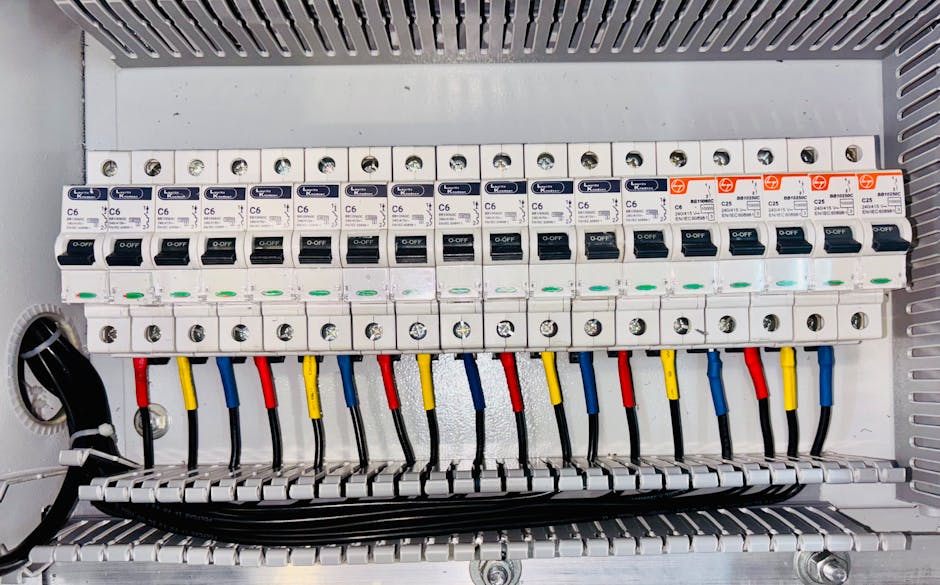
A DCPR breaker is a dual-function circuit protection device that combines overcurrent and ground fault detection in a single unit. It protects DC circuits from overloads and short circuits while meeting NEC code standards for modern electrical installations requiring enhanced safety.
What is a DCPR Breaker? Dual-Function Breaker Technology for Overcurrent Protection Explained
DCPR stands for DC Photovoltaic with Ground Fault Protection and Overcurrent Protection Requirement — a breaker classification developed to address the unique protection demands of direct current electrical systems. Unlike standard AC breakers, DCPR units are engineered to interrupt DC arc faults, which burn hotter and extinguish far less predictably than AC arcs.
These devices are increasingly common in solar panel arrays, battery storage systems, EV charging infrastructure, and commercial DC power distribution boards. According to the OSHA Electrical Safety Standards, DC systems present distinct arc flash and fault current hazards that require purpose-built interrupting devices rather than repurposed AC equipment.
What does DCPR stand for in electrical breakers?
DCPR stands for Direct Current Protection Requirement breaker — a device category that combines two functions in one housing: overcurrent protection (guarding against overloads and short circuits) and ground fault protection (detecting leakage current to ground). The “dual-function” designation reflects this integrated design, which eliminates the need for separate GFCI devices and overcurrent breakers in qualifying DC installations.
How DCPR Breakers Work: Dual-Function Breaker Technology Inside the Unit
DCPR breaker overcurrent protection operates through two independent sensing mechanisms housed in a single molded-case or miniature breaker form factor.
Overcurrent sensing uses a thermal-magnetic or electronic trip mechanism. When current exceeds the rated amperage — typically by 125% or more sustained — a bimetallic strip deflects or an electronic sensor triggers the trip coil. This mirrors standard breaker operation but is calibrated specifically for DC current characteristics, which do not cross zero 120 times per second like AC current.
Ground fault sensing monitors the differential between current flowing out of the positive conductor and returning through the negative. A leakage of as little as 4–6 milliamps triggers an immediate trip in residential-class DCPR units, while industrial versions may be set to 30 mA or higher thresholds depending on application.
The dual-function architecture means both protective events share a single trip bar. Either condition — overcurrent or ground fault — mechanically releases the contacts and opens the circuit within milliseconds. Industry testing data shows properly listed DCPR breakers interrupt DC fault currents up to 10,000 amperes interrupting capacity (AIC) in residential solar applications.
For accurate load calculations before selecting a DCPR unit, use the Electrical Load Calculator to determine your circuit’s continuous and non-continuous load values before specifying breaker amperage.
DCPR Breaker vs Standard Circuit Breakers
The core difference is interrupting medium. Standard AC breakers rely on the natural zero-crossing of alternating current to extinguish the arc when contacts open. DC current has no zero-crossing — the arc must be forcibly stretched and cooled. DCPR breakers use longer contact gaps, arc chutes with splitter plates, and magnetic arc blowout coils to accomplish this.
A standard 15A AC breaker installed in a DC circuit is not just non-compliant — it’s dangerous. The sustained DC arc can weld contacts together, ignite the breaker housing, or fail to interrupt under fault conditions entirely. DCPR-rated devices carry a separate DC voltage and amperage rating stamped on the label, typically formatted as “125 VDC / 15A” distinct from the AC rating.
Ground fault protection breakers designed for AC (GFCI) also cannot be substituted. AC GFCIs are calibrated to 60 Hz signal processing. DC ground fault sensing requires different circuitry entirely.
NEC Code Requirements for DCPR Installation
When do you need a DCPR breaker according to NEC code?
The 2023 NEC (National Electrical Code) addresses DC circuit protection requirements primarily in Article 690 (Solar Photovoltaic Systems), Article 706 (Energy Storage Systems), and Article 625 (Electric Vehicle Charging Systems). NEC Section 690.9 specifically mandates overcurrent protection for PV source circuits, PV output circuits, and inverter output circuits. Section 690.41 requires ground fault protection on PV systems to reduce fire risk.
NEC overcurrent protection requirements for DC circuits specify that:
- Overcurrent devices must be rated for DC use at the system voltage
- Ground fault protection is required on all grounded DC PV systems
- DCPR or equivalent dual-function devices satisfy both requirements simultaneously when listed for the application
- Breakers must be accessible and properly labeled per NEC Article 110.22
Local amendments may impose stricter requirements. Always verify with your Authority Having Jurisdiction (AHJ) before finalizing equipment selection.
Applications and Benefits in Electrical Systems
DCPR breaker overcurrent protection is now standard specification in:
- Residential solar arrays — string combiners, DC disconnects, and roof-mounted rapid shutdown systems
- Battery energy storage systems (BESS) — protecting charge/discharge circuits in lithium-ion and lead-acid bank installations
- EV charging infrastructure — DC fast chargers operating at 400–1000 VDC require purpose-rated protection devices
- Telecommunications DC power plants — 48 VDC distribution systems in data centers and cell tower equipment rooms
The primary benefit is panel space and cost efficiency. A single DCPR unit replaces a standalone overcurrent breaker plus a separate ground fault protection breaker — reducing panel real estate, wiring complexity, and the risk of mismatched component ratings.
Before laying out your DC panel, the Wire Size Calculator can help you confirm conductor ampacity matches your selected DCPR breaker rating per NEC Table 310.12 requirements.
Frequently Asked Questions About DCPR Breakers
Can a DCPR breaker be used on AC circuits?
No. DCPR breakers are listed specifically for DC applications. While some combination breakers carry both AC and DC ratings, never install a DC-only rated DCPR device on an AC circuit. The arc interruption design and ground fault sensing circuitry are calibrated for DC characteristics. Installing it on AC may result in nuisance tripping, failure to trip under fault, or breaker damage.
What amperage ratings are available for DCPR breakers?
Residential DCPR breakers are commonly available from 15A through 60A at 150 VDC or 300 VDC ratings. Commercial and industrial versions extend to 125A, 250A, and beyond at system voltages up to 1000 VDC for large-scale solar and BESS applications. Always match the DC voltage rating to your system’s open-circuit voltage (Voc), not operating voltage.
How do I know if my DCPR breaker has tripped due to overcurrent vs
Recommended Resources:
- Digital Multimeter with DC Testing — Essential tool for testing and diagnosing DC circuits protected by DCPR breakers; helps electricians verify proper circuit operation and troubleshoot issues.
- NEC Code Reference Book 2023-2026 — Directly complements the post’s emphasis on NEC code standards; necessary reference for professionals installing DCPR breakers and ensuring compliance.
- DC Circuit Protection Testing Kit — Practical equipment for testing overcurrent and ground fault detection functions of DCPR breakers; validates proper installation and safety compliance.
- Digital Multimeter with DC Testing — Essential tool for testing and diagnosing DC circuits protected by DCPR breakers; helps electricians verify proper circuit operation and troubleshoot issues.
- NEC Code Reference Book 2023-2026 — Directly complements the post’s emphasis on NEC code standards; necessary reference for professionals installing DCPR breakers and ensuring compliance.
- DC Circuit Protection Testing Kit — Practical equipment for testing overcurrent and ground fault detection functions of DCPR breakers; validates proper installation and safety compliance.
Related: Surge Protector Circuit Breaker: The Complete Whole Home Guide for 2026
Related: Subpanel Installation: The Complete 2026 Guide to a Second Breaker Panel
Related: Arc Fault Breaker Nuisance Tripping: Causes and Fixes
SPONSORED
Estimating Software Built for Electrical Contractors
ArcSite lets you draw site plans, create estimates, and close jobs faster — all from your phone or tablet. Used by 100,000+ field service professionals.
Try ArcSite Free →Affiliate partner — we may earn a commission at no cost to you.