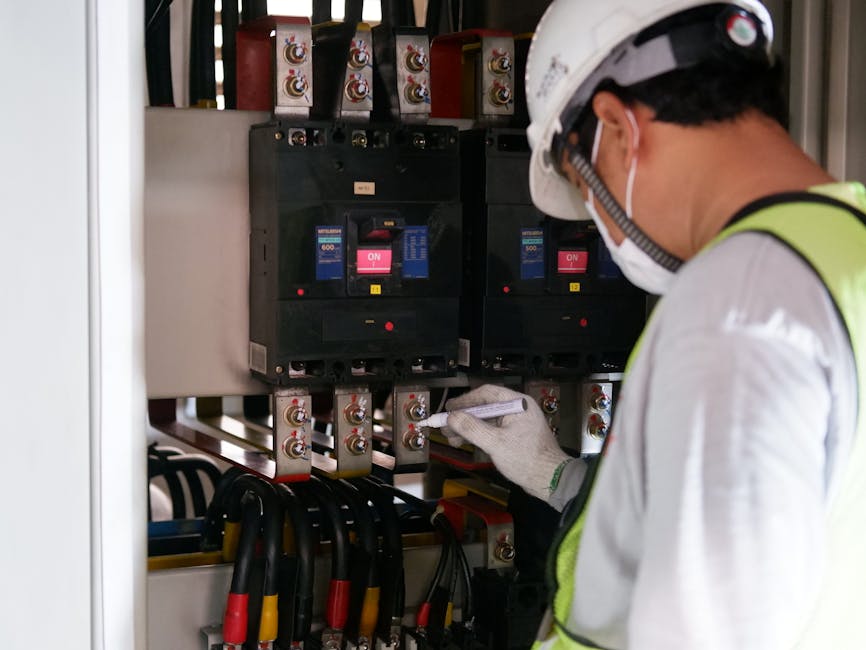
Your main breaker size determines how much total electrical power your home can safely use at any given time. Calculating your home’s total electrical load correctly ensures your breaker can handle peak demand without tripping, while also preventing dangerous overloads that could damage wiring or start fires. This guide walks you through the NEC method step-by-step so you can size your main breaker accurately.
Understanding Electrical Load Calculations
An electrical load calculation is a methodical process for determining the maximum amperage your household will draw simultaneously. The National Electrical Code (NEC) Article 220 provides the framework for these calculations, and they’re required by most jurisdictions before a main panel can be installed or upgraded.
The calculation isn’t just adding up every appliance’s nameplate amperage—that’s a common mistake. Instead, the NEC uses demand factors that reflect real-world usage patterns. For example, you’ll never run your oven, electric dryer, water heater, and air conditioner at full capacity simultaneously. The code accounts for this reality.
Your main breaker must be sized to handle the calculated demand load, not the theoretical maximum. If your calculation shows a 125-amp demand, you’d install a 125-amp main breaker (or the next standard size up if needed). Undersizing creates nuisance tripping; oversizing leaves your home vulnerable to dangerous conditions.
The NEC Method: Step-by-Step Calculation
The NEC Article 220 calculation follows this general approach:
Step 1: List All Permanent Loads
Start by identifying every permanently connected load in your home. This includes:
- Central air conditioning or heat pump
- Electric water heater
- Electric range or cooktop
- Electric dryer
- Permanently installed heating systems
- Permanently installed appliances (dishwasher, garbage disposal, etc.)
- General lighting and outlet circuits
Step 2: Apply Demand Factors
The NEC provides demand factor tables that reduce loads based on usage patterns:
- Lighting load: 100% of the first 3,000 watts, then 25% of the remainder (for dwelling units)
- Appliances: 75% demand factor for the four largest appliances (water heater, dryer, range, HVAC)
- Electric heating/cooling: Use the larger of heating or cooling load (you won’t use both simultaneously)
Step 3: Add the Calculated Loads
Total all demand loads in watts, then divide by 240 volts to get amperage. This is your calculated demand load in amps.
Step 4: Select the Main Breaker Size
Standard breaker sizes are 100A, 125A, 150A, 200A, and 225A. Choose the size equal to or exceeding your calculated load. Most homes built after 1990 have at least 100A service; many modern homes require 150A or 200A.
Common Loads and Demand Factors
Here’s a practical example showing how demand factors work in real calculations:
Large Appliances (Apply 75% Demand Factor)
- Electric water heater: 5,500W at 100% = 5,500W
- Electric dryer: 5,000W at 100% = 5,000W
- Electric range: 8,000W at 100% = 8,000W
- Central AC (13 SEER): 4,500W at 100% = 4,500W
Subtotal: 23,000W × 0.75 demand factor = 17,250W
Lighting and General Circuits
- First 3,000W at 100% = 3,000W
- Additional 5,000W at 25% = 1,250W
Lighting subtotal: 4,250W
Total Calculated Load
17,250W + 4,250W = 21,500W ÷ 240V = 89.6 amps
In this example, a 100-amp main breaker would be appropriate. However, many homes have higher loads due to larger HVAC systems, multiple air conditioning zones, or larger ranges. A 150-amp or 200-amp service provides headroom for future additions without requiring expensive panel upgrades later.
How to Use the Calculator
While manual calculations following NEC Article 220 are accurate, the electrical load calculator at electricalcalcpro.com’s electrical load calculator streamlines the process significantly. Simply input your appliance wattages and quantities, and the calculator automatically applies the correct demand factors, shows your intermediate calculations, and recommends appropriate breaker sizes.
This tool is especially useful for contractors and electricians who perform calculations regularly, but homeowners planning upgrades also benefit from seeing the math broken down clearly. You can save your calculation results for reference during permit applications or inspections.
Frequently Asked Questions
What if my calculated load is exactly between two standard breaker sizes?
Always round up to the next standard breaker size. If your calculation shows 145 amps, you must install a 150-amp breaker, not squeeze in a 125-amp. The NEC requires that the breaker accommodate your demand load without constantly nuisance-tripping. Code also allows oversizing in this situation because the service entrance wiring and meter will have been sized appropriately during the initial design.
Can I use a smaller breaker if I promise not to use certain appliances simultaneously?
No. Main breaker sizing is based on calculated demand, not personal usage habits. The code assumes you might run your air conditioner and electric dryer simultaneously on a hot summer day. A breaker undersized for your calculated load violates the NEC and creates fire and shock hazards. More importantly, if a circuit overloads beyond the breaker’s rating, it won’t trip fast enough, potentially damaging wiring insulation.
How often do I need to recalculate my electrical load?
Any time you make major changes to your home’s electrical systems—adding a new air conditioning zone, upgrading to an electric range, installing a hot tub, or adding circuits. You should also recalculate before a service upgrade to ensure the new panel size matches your actual needs. Many electricians include a fresh load calculation as part of the upgrade plan for local permitting.
Proper main breaker sizing protects your home, ensures reliable power delivery, and prevents costly nuisance tripping. Use the NEC Article 220 method, apply demand factors correctly, and size your breaker to match your calculated load—no shortcuts.
- Kill A Watt Electricity Usage Monitor — Helps homeowners measure actual electrical load and power consumption of appliances to accurately calculate total home electrical demand for breaker sizing
- Digital Clamp Multimeter — Essential tool for electricians and DIY homeowners to measure current draw and voltage, critical for verifying electrical load calculations and breaker compatibility
- Home Electrical Load Calculator Software/Apps — Specialized tools that simplify the complex math involved in calculating total home electrical load based on appliance specifications and peak demand scenarios
Related: EV Home Charging: Level 1 vs Level 2 Cost Breakdown
Related: EV Home Charging: Level 1 vs Level 2 Cost Breakdown
Related: Home Electrical Load Calculation: Service Size Step-by-Step
Related: Circuit Breaker Sizing: Calculate Amperage for Any Load
Related: Circuit Breaker Sizing: Calculate Amperage for Any Load
Related: Circuit Breaker Sizing: Calculate Load Amperage Correctly
SPONSORED
Estimating Software Built for Electrical Contractors
ArcSite lets you draw site plans, create estimates, and close jobs faster — all from your phone or tablet. Used by 100,000+ field service professionals.
Try ArcSite Free →Affiliate partner — we may earn a commission at no cost to you.