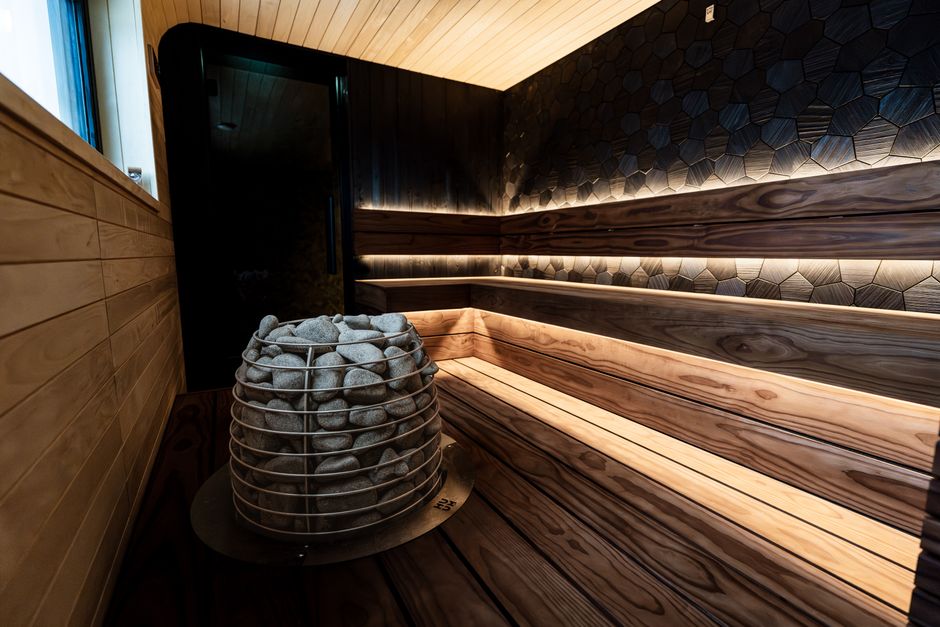
Saunas require a dedicated 240-volt circuit with proper sizing based on heater wattage, typically 40-60 amps. Installation must meet NEC Article 682 standards, include moisture-resistant components, GFCI protection, and proper grounding to ensure safety in the wet environment. (Related: Electrical power requirements and NEC compliance for data center infrastructure) (Related: Essential 2026 Guide: 5 Crawlspace Electrical Requirements You Must Know) (Related: Swimming Pool Bonding Requirements: 7 Essential Rules for 2026) (Related: Electrical Panel Upgrade Cost: What to Budget in 2025) (Related: Power Factor in Commercial Electrical Systems: 5 Proven Ways to Cut Costs in 2026) (Related: Complete Guide to NFPA 70 National Electrical Code (NEC): Key Requirements, Updates, and Practical Applications for Electricians)
Sauna Electrical Requirements: 240V Circuit Basics
A residential sauna is one of the most electrically demanding fixtures you can install. Unlike a standard appliance, a sauna heater operates continuously at high temperatures in a moisture-saturated environment — a combination that makes proper electrical planning non-negotiable.
Most residential sauna heaters range from 3,000 watts on the low end to 12,000 watts or more for larger units. All heaters above approximately 240 watts require a dedicated 240-volt circuit. This means the circuit serves only the sauna — no shared loads, no piggybacking on existing branch circuits.
The sauna 240 volt installation must originate at your main service panel with a two-pole breaker. Wire runs from the panel to the sauna disconnect, then to the heater control unit. Conductor sizing must account for the full continuous load, which the NEC defines as a load expected to continue for three or more hours — requiring conductors sized at 125% of the operating load.
NEC Code Requirements for Sauna Installation
The NEC sauna electrical code is primarily governed by Article 422 (Appliances) and Article 680 (Swimming Pools, Hot Tubs, and Similar Installations) for wet-area guidance, along with manufacturer installation specifications that often carry the force of code under NEC Section 110.3(B). According to OSHA’s electrical safety standards, installations in high-moisture environments must use listed equipment appropriate for the conditions and follow all applicable wiring methods.
Key NEC sauna electrical safety requirements include:
- Dedicated circuit: The sauna heater must be on its own circuit, isolated from other loads.
- Disconnect means: A readily accessible disconnect must be located within sight of the sauna heater and outside the sauna room itself.
- Equipment listing: All components — heater, controls, luminaires — must be listed for sauna or wet-location use.
- Wire clearance: Wiring within the sauna must maintain minimum clearance from heat sources as specified in NEC Article 680 and manufacturer instructions.
- Temperature rating: Conductors inside the sauna room typically require a minimum 90°C temperature rating due to ambient heat conditions.
Always check your local jurisdiction, as many municipalities amend the NEC with stricter requirements for sauna installations.
Moisture-Resistant Wiring and Component Selection
Selecting moisture resistant sauna wiring is one area where cutting corners creates lasting hazards. Standard NM-B (Romex) cable is not rated for wet or damp locations and should never be used inside or immediately adjacent to a sauna room.
Approved wiring methods for sauna installations typically include:
- THWN-2 or XHHW-2 conductors in conduit — suitable for wet locations and rated for elevated temperatures
- MC Cable (Metal-Clad) with conductors rated for wet locations and 90°C minimum
- Rigid Metal Conduit (RMC) or IMC for exposed runs in moisture-prone areas
All junction boxes, conduit fittings, and enclosures inside the sauna envelope must carry a wet-location or sauna-rated listing. Standard plastic boxes are not appropriate. Use cast aluminum or stainless steel enclosures rated for the environment.
Luminaires — if installed inside the sauna — must be specifically listed for sauna use. These fixtures are built to withstand both the extreme heat and steam present during operation. Installing a standard recessed can inside a sauna ceiling is a code violation and a fire hazard.
Circuit Breaker Sizing and Load Calculations
What size breaker do I need for a sauna?
The sauna circuit breaker size depends directly on the heater’s wattage rating. Use this straightforward formula:
Amperage = Watts ÷ Volts
Then multiply by 1.25 for the continuous load factor.
For example, a 6,000-watt sauna heater on a 240-volt circuit draws 25 amps at full load. Multiplying by 1.25 gives a minimum circuit capacity of 31.25 amps — meaning you’d install a 40-amp two-pole breaker with 8 AWG copper conductors (or as specified by the heater manufacturer).
Common sauna breaker sizing by heater wattage:
- 3,000–4,500W: 30-amp breaker, 10 AWG copper minimum
- 5,000–7,500W: 40-amp breaker, 8 AWG copper minimum
- 8,000–10,000W: 50-amp breaker, 6 AWG copper minimum
- 10,000–12,000W: 60-amp breaker, 4 AWG copper minimum
Always verify conductor sizing against the heater’s nameplate and installation manual. Manufacturer requirements may be more restrictive than the NEC minimum.
Grounding and GFCI Protection for Saunas
Does a sauna need a GFCI outlet?
GFCI protection requirements for saunas depend on the installation type and local code amendments, but the answer is generally yes — and for good reason. Any 240-volt receptacle installed in a damp or wet location requires GFCI protection under the NEC. More critically, the high-moisture environment of a sauna creates elevated shock risk, making GFCI protection a fundamental sauna electrical safety requirement regardless of whether your local inspector requires it.
Two-pole GFCI breakers are the most practical solution for 240-volt sauna circuits. They protect the entire circuit from the panel and eliminate the need for a GFCI receptacle at the point of use. Many sauna heater manufacturers specifically recommend or require GFCI protection in their installation documentation.
Grounding requirements are equally important. All metal enclosures, conduit, the heater chassis, and control panels must be bonded to the equipment grounding conductor. The grounding conductor must be continuous back to the main panel’s grounding bus. Per OSHA electrical safety guidelines, equipment grounding in high-moisture environments is a critical safeguard against electric shock — it provides the fault current path that allows the breaker or GFCI to operate correctly in the event of an insulation failure.
Common Sauna Electrical Installation Mistakes
Understanding what goes wrong helps you avoid the same errors on your installation:
- Using NM-B cable inside the sauna room: Standard household wire is not rated for moisture or high heat. It degrades and becomes a fire risk.
- Undersizing the circuit: Failing to apply the 125% continuous load factor results in nuisance tripping and potential conductor overheating.
- No visible disconnect: The NEC requires the
Recommended Resources:
- Siemens 200-Amp Main Breaker Panel — Essential for upgrading electrical service to accommodate dedicated 240V sauna circuits; directly supports the panel capacity planning discussed in the guide
- GFCI 240V Circuit Breaker (Eaton or Square D) — Mandatory safety component highlighted in the article for sauna installations; protects against ground faults in wet environments per NEC Article 682
- Southwire 6 AWG THWN Wire (Copper) — Appropriately sized electrical wire for 40-60 amp dedicated circuits; necessary for proper installation meeting NEC standards mentioned in the guide
See also: The Complete Electrical Panel Labeling System Guide for 2026
See also: Complete Guide to Conduit Fill Calculations: NEC Tables 2026
Related: Complete Electrical Panel Labeling System Guide for 2026
Related: 50 Amp vs 30 Amp RV Plug: The Complete 2026 Guide
SPONSORED
Estimating Software Built for Electrical Contractors
ArcSite lets you draw site plans, create estimates, and close jobs faster — all from your phone or tablet. Used by 100,000+ field service professionals.
Try ArcSite Free →Affiliate partner — we may earn a commission at no cost to you.
Advertisement