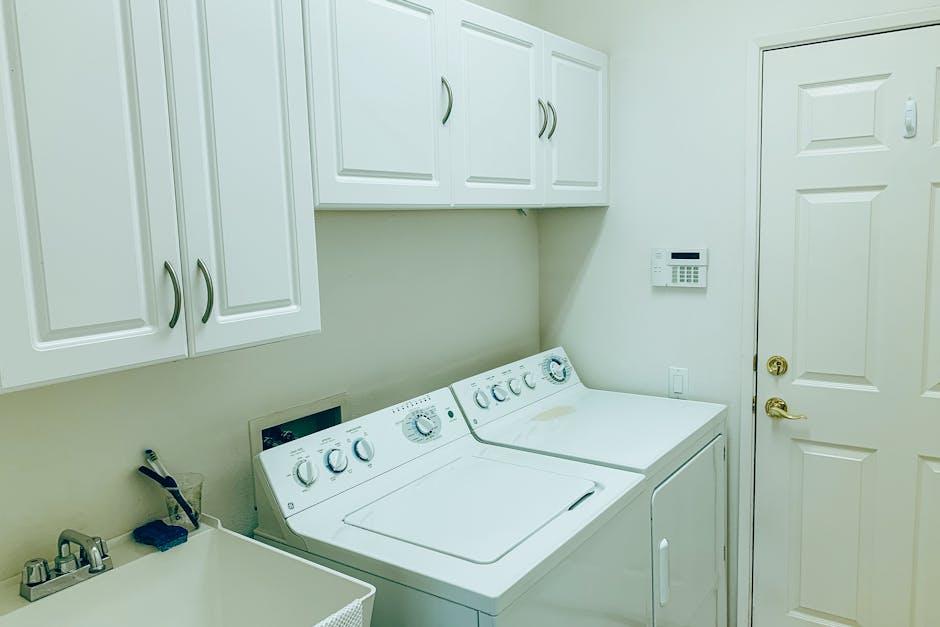
Laundry rooms require dedicated circuits for both washing machines and dryers per NEC Code. A washing machine needs a minimum 20-amp circuit on 12 AWG wire, while electric dryers require a dedicated 30 or 50-amp circuit depending on voltage, using appropriate wire gauge to prevent overload and ensure safety.
NEC Code Requirements for Laundry Room Circuits
The National Electrical Code (NEC) establishes mandatory standards for laundry room electrical installations. According to OSHA’s electrical safety resources, laundry appliances present unique hazards due to moisture, heat, and continuous operation patterns that demand specialized circuit design.
NEC Article 210.11(C)(2) specifically requires at least one 20-amp branch circuit in laundry areas, dedicated solely to receptacles serving laundry equipment. This isn’t optional—it’s a code requirement that protects your home from overloads, fires, and electrical hazards. The washing machine dryer circuit requirements differ significantly because each appliance has distinct power demands and operating characteristics.
Your laundry room layout must account for moisture conditions. Article 210.8(A)(11) mandates GFCI (Ground Fault Circuit Interrupter) protection for all receptacles within 6 feet of a sink or water source. This protection detects ground faults in milliseconds, preventing electrocution and shock hazards—critical in wet environments where laundry rooms operate.
Additionally, NEC laundry room wiring code requires proper clearances around appliances. You need at least 3 feet of working space in front of electrical panels and equipment, ensuring safe access for repairs and maintenance. Ventilation must be considered: electric dryers generate significant heat, requiring proper exhaust ducting separate from electrical circuits.
Washing Machine Circuit Specifications and Sizing
Washing machines operate on standard household circuits, but they require dedicated wiring for safety and performance. A dedicated circuits washing machine installation starts with understanding amperage ratings.
Standard washing machines draw 12-15 amps during operation, making a minimum 20-amp branch circuit necessary. This protects against nuisance tripping when your machine cycles through wash, rinse, and spin phases. Never share this circuit with other appliances or outlets—dedicated means exclusively for the washing machine.
For wire sizing, use 12 AWG copper wire for 20-amp circuits, running directly from your main electrical panel to the washing machine outlet. The circuit must include an accessible outlet box, typically a standard 120-volt receptacle positioned 12-18 inches above the floor for convenient access.
Your dedicated washing machine circuit should include a 20-amp single-pole circuit breaker. The breaker protects the wire and appliance by interrupting power if current exceeds safe levels. Always use GFCI protection on this circuit—most modern washing machine outlets include built-in GFCI, but verify with your specific model.
Distance matters when sizing wire. If your laundry room is more than 50 feet from the main panel, you may need to upgrade to 10 AWG wire to account for voltage drop. Use our wire size calculator to verify proper gauge for your installation distance and amperage requirements.
Can a washing machine and dryer share the same circuit?
No. NEC code explicitly prohibits sharing circuits between laundry appliances. Code requires separate dedicated circuits because simultaneous operation would exceed 20-amp capacity. A washing machine pulling 12 amps plus a dryer operating would create dangerous overload conditions. Each appliance needs its own circuit to prevent fires and equipment damage.
Dryer Circuit Requirements and Breaker Selection
Electric dryers represent the most demanding load in most homes, requiring oversized circuits and heavy-gauge wiring. Understanding dryer circuit requirements is essential for safe laundry room electrical layout.
Electric dryers typically operate at either 120/240 volts or 240 volts only. Most modern dryers are 240-volt appliances drawing 20-25 amps, requiring a minimum 30-amp circuit. However, larger capacity dryers and some commercial units demand 50-amp circuits.
For a 30-amp dryer circuit, use 10 AWG copper wire with a 30-amp double-pole circuit breaker. For 50-amp dryers, step up to 6 AWG wire with a 50-amp double-pole breaker. The double-pole configuration ensures both hot legs of the 240-volt supply are simultaneously disconnected for safety.
Dryer receptacles differ from standard outlets. A 30-amp dryer requires a NEMA 10-30R receptacle (or newer NEMA 14-30R which includes ground), while 50-amp dryers use NEMA 10-50R or NEMA 14-50R receptacles. Never use adapters or makeshift connections—proper receptacles ensure safe, reliable operation.
Gas dryers, by contrast, only require a 120-volt circuit for ignition and controls, typically a standard 15 or 20-amp circuit. This smaller circuit should still be dedicated to avoid nuisance tripping.
Verify your dryer’s nameplate rating—it’s the definitive source for circuit requirements. Check the manufacturer specifications for exact amperage, voltage, and recommended breaker size before installing circuits.
Laundry Room Outlet Layout and Placement
Strategic outlet placement improves functionality and safety in your laundry room. Position your washing machine outlet 12-18 inches above the floor, within 6 feet of the washer location to minimize cord length and tripping hazards.
Dryer outlets should be positioned at approximately the same height (12-18 inches) directly behind or near where your dryer sits. Avoid running cords across walkways where people might trip. If building a new laundry room, plan outlet locations before framing walls—it’s much easier than retrofitting.
Include at least one additional standard 120-volt, 20-amp outlet for miscellaneous items like a utility light, iron, or vacuum. This outlet can share the washing machine circuit if it serves that general area, but never on the dedicated dryer circuit.
GFCI protection applies to all outlets within 6 feet of water sources. Install GFCI outlets or use GFCI breakers that protect the entire circuit. Test GFCI monthly by pressing the test button—it should cut power immediately.
How to Use the Calculator
Our breaker size calculator simplifies selecting correct amperage for your appliances. Enter your dryer or washing machine amperage, and the calculator recommends appropriate breaker sizes based on NEC standards. For complex installations with multiple appliances or longer distances, use our voltage drop calculator to ensure wire sizing accounts for distance.
Common Mistakes in Laundry Room Wiring
Many DIY installations and some contractors make preventable errors that compromise safety. The most dangerous mistake is undersizing circuits. Never install a 20-amp breaker on a dryer circuit—it won’t protect properly and creates fire hazard.
Another frequent error is improper GFCI implementation. Some installers forget this protection entirely or position outlets more than 6 feet from water sources when they should be protected. Always verify moisture conditions and install GFCI regardless—it costs little and saves lives.
Mixing wire gauges within a single circuit creates problems. If you start with 10 AWG wire, maintain that size throughout. Splicing to smaller wire defeats the circuit’s protective capacity and violates code.
Finally, many homeowners don’t account for voltage drop on longer runs. A
- 12 AWG Electrical Wire (Copper, UL Listed) — Directly mentioned in post as required wire gauge for washing machine circuits; essential for laundry room installation
- 20-Amp Circuit Breaker (Siemens or Square D) — Essential component for the dedicated 20-amp washing machine circuit discussed throughout the guide
- 50-Amp Double Pole Circuit Breaker & Wire Kit — Required for electric dryer circuits mentioned in post; completes the essential laundry room electrical setup covered in NEC code guide
Related: Refrigerator Dedicated Circuit Code: 5 Essential Requirements for 2026
Related: 240V Dryer Circuit Installation: 5 Essential Steps in 2026
Related: The Complete Guide to Laundry Room Electrical Circuits in 2026
Related: Complete Water Heater Circuit Sizing Guide: Tank vs Tankless 2026
Related: 2026 Complete Guide to Laundry Room Electrical Circuits
SPONSORED
Estimating Software Built for Electrical Contractors
ArcSite lets you draw site plans, create estimates, and close jobs faster — all from your phone or tablet. Used by 100,000+ field service professionals.
Try ArcSite Free →Affiliate partner — we may earn a commission at no cost to you.