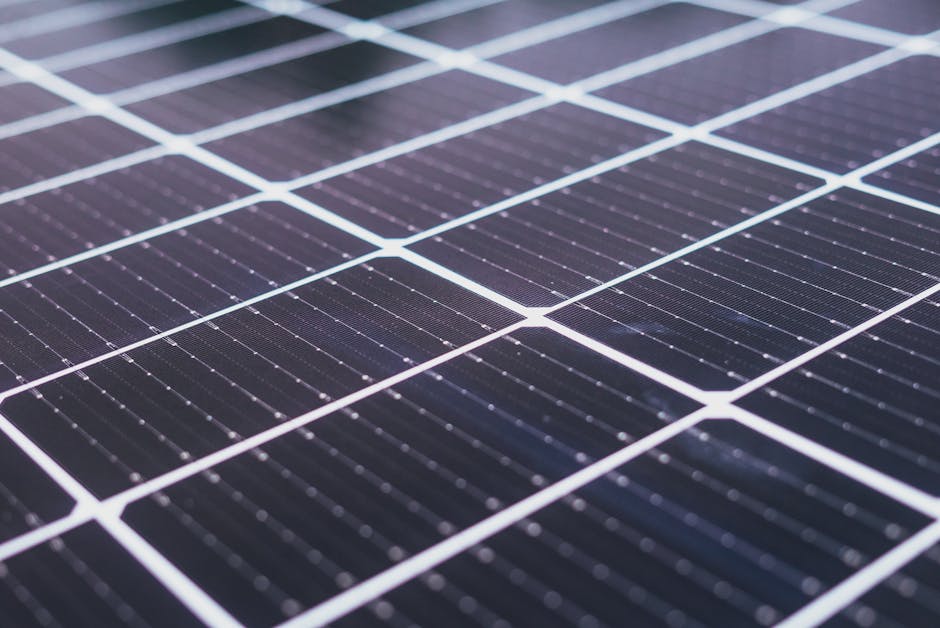
A solar panel system calculator determines the watts, battery capacity, and inverter size needed based on your daily energy consumption. Calculate total wattage by multiplying average daily usage (kWh) by 1000, then size batteries for days of autonomy and inverters for peak loads.
How to Calculate Solar Panel System Size
Sizing a solar power system starts with understanding your energy consumption patterns. Most homeowners and contractors underestimate peak loads, which leads to undersized systems that fail during high-demand periods.
Begin by collecting 12 months of utility bills to determine your average daily consumption in kilowatt-hours (kWh). Multiply this number by 1000 to convert to watt-hours. For example, if your home uses 30 kWh per day, that equals 30,000 watt-hours.
Next, account for system losses. Solar panels degrade over time, inverters lose efficiency during conversion, and wiring introduces resistance. Industry standard accounts for 25–30% system loss, meaning you need to oversize your array by this percentage. If you calculated 30,000 watt-hours needed, add 7,500 to 9,000 watt-hours to compensate for these real-world losses.
Your location’s peak sun hours matter significantly. A home in Arizona receives more daily sun than one in the Pacific Northwest. OSHA electrical safety guidelines don’t directly address solar sizing, but the National Renewable Energy Laboratory (NREL) publishes solar irradiance data by region. Check your area’s average peak sun hours—typically 4 to 6 hours daily depending on latitude and climate.
Divide your adjusted watt-hour requirement by your region’s peak sun hours to find the required panel wattage. A 30,000 watt-hour system in a 5-hour peak sun area needs a 6,000-watt array minimum.
Determining Battery Capacity for Solar Storage
Battery sizing for off-grid solar system design depends on two factors: daily energy consumption and days of autonomy (how many consecutive cloudy days you want to survive without solar production).
Start with your daily consumption figure. If you use 30 kWh per day and want 3 days of autonomy, multiply 30 kWh × 3 = 90 kWh of usable capacity needed.
However, most lithium and lead-acid batteries shouldn’t be discharged 100%. Lithium batteries typically allow 80–95% depth of discharge (DoD), while lead-acid batteries should only reach 50% DoD for longevity. If your 90 kWh requirement assumes 80% usable capacity, divide by 0.80 to find total battery size: 90 kWh ÷ 0.80 = 112.5 kWh installed capacity.
For battery size for solar system calculations, also consider your system voltage. A 48-volt system is standard for residential off-grid installations because it reduces current and improves safety. Our solar battery sizing calculator helps determine the exact amp-hour rating needed based on voltage and energy requirements.
Temperature affects battery performance. Cold climates reduce usable capacity by 20–30%, so add buffer storage in northern regions. Also account for peaking loads—brief surges when multiple appliances start simultaneously—which can temporarily exceed your average consumption.
Selecting the Right Inverter Size
What size inverter do I need for my solar panel system?
Your inverter must handle the highest instantaneous power draw in your home. This isn’t your average consumption—it’s your peak load during simultaneous appliance operation.
Identify which loads run together. A typical home scenario: air conditioning (5,000W), electric water heater (4,500W), and microwave (1,200W) simultaneously create a 10,700-watt peak demand. Your inverter needs at least this capacity, plus 20–25% safety margin, making an 13,000–14,000-watt inverter appropriate.
Many contractors recommend sizing inverters 1.5× your calculated peak load to handle motor starting surge currents. Refrigerators, air conditioners, and well pumps draw 2–4 times their running wattage during startup.
Inverter efficiency varies. Modern inverters operate at 92–97% efficiency at rated load, dropping to 75–85% efficiency at 25% load. This matters for solar panel watts calculator accuracy—you’ll need slightly larger PV arrays to compensate. Choose inverters with high efficiency ratings across a wide load range, not just at full capacity.
Using the Solar Panel System Calculator
Our solar inverter sizing calculator simplifies the three-step process: input your daily consumption, days of backup autonomy, and peak load watts.
The calculator immediately outputs:
- Recommended solar array size in watts
- Required battery capacity in kilowatt-hours
- Minimum inverter rating in watts
- System-loss compensation recommendations
For grid-tied systems, the inverter is simpler—match it closely to your array output. A 6,000-watt solar array pairs with a 6,000–7,000-watt grid-tie inverter. Off-grid systems require larger inverters because batteries discharge into them sporadically, whereas grid-tie inverters operate at more consistent loads.
Run the calculator quarterly during system planning. Update inputs as you modify your home’s energy consumption—adding an EV charger or heat pump changes your peak load significantly.
NEC Code Considerations for Solar Installations
The National Electrical Code Article 690 governs solar photovoltaic systems. Key provisions affect your sizing:
Conductor sizing: NEC 690.8 requires solar circuit conductors sized for 125% of the maximum current under standard test conditions. Your solar panel watts calculator output feeds into conductor ampacity calculations—use our wire size calculator to match cable gauges to your array’s open-circuit voltage and short-circuit current.
Disconnects and overcurrent protection: NEC 690.13 mandates disconnecting means for both the DC and AC sides of your system. A 6,000-watt array requires appropriately rated breakers and disconnects based on your system voltage and current.
Grounding: Article 690 Part V requires equipment grounding and bonding for safety. This becomes critical in off-grid systems where battery banks introduce additional grounding challenges.
Permitting requirements vary by jurisdiction. Most require engineers to stamp calculations proving your solar panel system calculator outputs comply with local codes and wind/snow load standards for your region.
Frequently Asked Questions
How do I calculate battery capacity for a solar system?
Multiply your daily energy consumption (kWh) by desired days of autonomy, then divide by your battery’s depth-of-discharge percentage. Example: 30 kWh/day × 3 days ÷ 0.80 DoD = 112.5 kWh total capacity needed. Account for temperature derating in cold climates by adding 20–30% additional capacity.
Does system size change if I add an electric vehicle charger?
Yes, significantly. EV chargers draw 7,200–11,500 watts during operation. Recalculate your peak load and daily consumption with the charger included. You may need 50–100% larger arrays
- Kill-A-Watt Electricity Usage Monitor — Essential tool for measuring daily energy consumption accurately, which is the first step in the solar panel sizing calculator discussed in the post.
- Solar Panel System Design Software (PVsyst or similar) — Professional software tools that complement manual calculations, helping users validate their system sizing and optimize panel placement and configuration.
- Portable Solar Power Station & Battery System — Helps readers understand battery capacity and inverter sizing concepts in practice, demonstrating real-world examples of the components discussed in the sizing calculator.
See also: How to Wire a 3-Way Switch: Complete Installation Guide
See also: EV Home Charging: Level 1 vs Level 2 Cost Breakdown
See also: EV Home Charging: Level 1 vs Level 2 Cost Breakdown
Related: 7 Essential Steps to Size Furnace Electrical Connections Correctly in 2026
Related: Solar Battery Storage: How to Size a Home Battery System
Related: Solar Panel Wiring: How to Calculate Wire Size and Voltage Drop
Related: Solar Panel Calculator: Size Your System the Right Way
SPONSORED
Estimating Software Built for Electrical Contractors
ArcSite lets you draw site plans, create estimates, and close jobs faster — all from your phone or tablet. Used by 100,000+ field service professionals.
Try ArcSite Free →Affiliate partner — we may earn a commission at no cost to you.