Why Wire Gauge Matters More Than Most People Realize
Choosing the wrong wire gauge is one of the most common — and most dangerous — mistakes in electrical work. Use wire that is too thin for the load it carries and you risk overheating, melted insulation, tripped breakers, and in the worst cases, electrical fires. Use wire that is too thick and you waste money on copper that you simply do not need. A wire gauge calculator removes the guesswork entirely, giving you a precise answer based on the actual current, voltage, and distance involved in your project. (Related: Washington State L&I Electrical Safety Standard Updates and NEC Code Compliance) (Related: Conduit Fill Calculator: Size Conduit the Right Way) (Related: 2026 Complete Guide to Laundry Room Electrical Circuits) (Related: Commercial electrical service requirements and NEC code compliance for business installations in Pacific Northwest) (Related: Complete Guide to Three-Phase Power Residential Installation in 2026) (Related: Dimmer Switch Installation Load Limits: The Complete 2026 Guide)
Whether you are wiring a new outlet in your garage, running a 240-volt circuit for a hot tub, or installing a solar panel system, the wire size you choose affects both safety and efficiency. Voltage drop alone can cost you real money — a poorly sized wire run on a 100-foot 20-amp circuit can lose 3 to 5 percent of usable power, which adds up on your electricity bill over months and years. Understanding how to use a wire gauge calculator correctly puts you in control of those outcomes.
How the American Wire Gauge (AWG) System Works
In the United States, wire sizes are measured using the American Wire Gauge system, commonly abbreviated AWG. The system works counterintuitively at first: the smaller the AWG number, the thicker the wire. A 4 AWG wire is much thicker than a 14 AWG wire. This numbering system dates back to the number of drawing dies the wire passed through during manufacturing — more passes produced thinner wire and a higher gauge number.
Here are some of the most common AWG sizes you will encounter in residential and light commercial work:
- 14 AWG — Rated for 15 amps; used on standard lighting and outlet circuits
- 12 AWG — Rated for 20 amps; required for kitchen and bathroom outlet circuits
- 10 AWG — Rated for 30 amps; used for dryers, water heaters, and EV chargers at shorter runs
- 8 AWG — Rated for 40 amps; commonly used for large appliances and subpanel feeds
- 6 AWG — Rated for 55 amps; used for large subpanels and hot tubs
- 4 AWG — Rated for 70 amps; used for large subpanels and service entrance conductors
These ampacity ratings are based on the National Electrical Code (NEC) for copper conductors at 60°C or 75°C insulation ratings. Aluminum wire, which is cheaper but has higher resistance, requires you to go up by roughly two gauge sizes to carry the same current safely.
What a Wire Gauge Calculator Actually Computes
A good wire gauge calculator does not simply look up a table — it applies the actual physics of electrical circuits. The two primary calculations involved are ampacity and voltage drop.
Ampacity determines the maximum current a wire can carry without overheating. The NEC requires that conductors be sized at 125 percent of the continuous load. That means if your circuit will run a 16-amp load continuously, you need a wire rated for at least 20 amps — which means 12 AWG copper minimum.
Voltage drop is calculated using the formula: VD = (2 × K × I × L) / CM, where K is the resistivity constant for the conductor material (12.9 for copper, 21.2 for aluminum), I is the current in amps, L is the one-way length of the run in feet, and CM is the circular mil area of the wire. The NEC recommends keeping voltage drop to no more than 3 percent on branch circuits and 5 percent total including feeder runs. On a 120-volt circuit, 3 percent equals just 3.6 volts — a number that matters significantly for sensitive electronics, LED lighting, and motors.
A wire gauge calculator takes your inputs — voltage, amperage, wire length, conductor material, and acceptable voltage drop percentage — and outputs the minimum recommended AWG size, along with the actual voltage drop and power loss figures for that wire size.
Step-by-Step: How to Use a Wire Gauge Calculator
Using a wire gauge calculator is straightforward when you know what information to gather beforehand. Follow these steps for accurate results every time:
- Determine the load current. Check the nameplate amperage on the appliance or add up the amperage ratings of all devices on the circuit. For continuous loads, multiply by 1.25.
- Measure the wire run distance. Measure the one-way distance in feet from the panel or power source to the farthest point of the circuit. Do not forget to account for vertical runs inside walls.
- Select your voltage. Most residential circuits are 120V or 240V. Three-phase commercial circuits run at 208V or 480V.
- Choose your conductor material. Copper is the standard for most residential work. Aluminum is common for service entrance conductors and large feeder runs due to its lower cost — 4/0 aluminum costs roughly $1.80 to $2.50 per foot compared to $3.50 to $5.00 per foot for the equivalent copper.
- Enter your maximum allowable voltage drop. Use 3 percent for branch circuits and 2 percent for feeders if you want to stay well within NEC recommendations.
- Review the output. Use our free electrical calculator at our free electrical calculator to instantly see the recommended AWG, the actual voltage drop percentage, and the power lost in watts for that wire run.
Common Wire Sizing Mistakes and How to Avoid Them
Even experienced DIYers make wire sizing errors that a calculator would have caught immediately. One of the most frequent mistakes is ignoring wire run length entirely and simply matching the wire gauge to the breaker size. This works fine for a 15-foot run but fails badly on a 150-foot run, where voltage drop can push well past the 3 percent threshold even on correctly ampacity-rated wire. In those cases, you need to upsize — moving from 12 AWG to 10 AWG or even 8 AWG depending on the load and distance.
Another common error is forgetting the ambient temperature correction. Wire running through an attic that regularly hits 120°F in summer must be derated according to NEC Table 310.15(B)(1). At 120°F (49°C), a 12 AWG conductor rated at 20 amps must be derated to about 15 amps — which may mean you need 10 AWG for that attic run instead.
Bundling multiple wires in conduit also requires derating. When four to six current-carrying conductors share a conduit, the NEC requires an 80 percent derating factor, and for seven to nine conductors it drops to 70 percent. A wire gauge calculator that includes conduit fill inputs will handle these adjustments automatically.
Frequently Asked Questions
What is the most common wire gauge used in homes?
The two most common gauges in residential wiring are 14 AWG and 12 AWG copper. 14 AWG is used on 15-amp lighting and general outlet circuits, while 12 AWG is required by the NEC for 20-amp circuits in kitchens, bathrooms, and laundry rooms. Many electricians today run 12 AWG throughout a home for added safety margin, even on 15-amp circuits.
How do I know if I need to upsize my wire gauge for a long run?
If your one-way wire run exceeds 50 to 75 feet on a standard 120-volt 15- or 20-amp circuit, you should run a voltage drop calculation before finalizing your wire size. A wire gauge calculator will tell you precisely at what distance the voltage drop exceeds 3 percent and which larger gauge will bring it back into compliance. For example, a 100-foot 20-amp run often requires 10 AWG instead of 12 AWG to stay within the 3 percent threshold.
Is aluminum wire safe to use?
Modern aluminum wiring, specifically AA-8000 series alloy conductors, is safe and code-compliant when installed correctly with aluminum-rated connectors and terminals. The key is never mixing aluminum wire with devices rated for copper only. Aluminum is commonly used for 100-amp or larger service entrance conductors and feeder runs because it costs 30 to 50 percent less than equivalent copper and is significantly lighter to handle on long runs.
What does voltage drop actually cost me in real dollars?
A 5 percent voltage drop on a circuit powering a 1,500-watt space heater means you are losing 75 watts of heating capacity — essentially paying for power you are not receiving. Over a winter heating season of roughly 1,000 hours, that equals 75 kilowatt-hours of wasted energy, which costs approximately $9 to $15 at average U.S. electricity rates in 2026. On larger industrial motors or solar inverter output circuits, that loss scales dramatically and justifies spending $50 to $200 more on heavier gauge wire upfront.
Can I use a wire gauge calculator for solar panel wiring?
Absolutely — and it is highly recommended. Solar PV wiring involves DC current at varying voltages, often over long distances between panels, charge controllers, and inverters. Voltage drop in a DC solar circuit directly reduces the energy harvested from your panels. A wire gauge calculator that supports DC circuits will factor in the correct resistivity constant and help you choose between 10 AWG, 8 AWG
- Digital Wire Gauge and Thickness Measurement Tool — Directly complements the wire gauge guide by providing a practical handheld tool for measuring actual wire sizes during electrical projects
- Electrical Wire Assortment Kit with Multiple Gauges — Practical for DIYers and electricians to have properly gauged wires on hand for various applications discussed in the guide
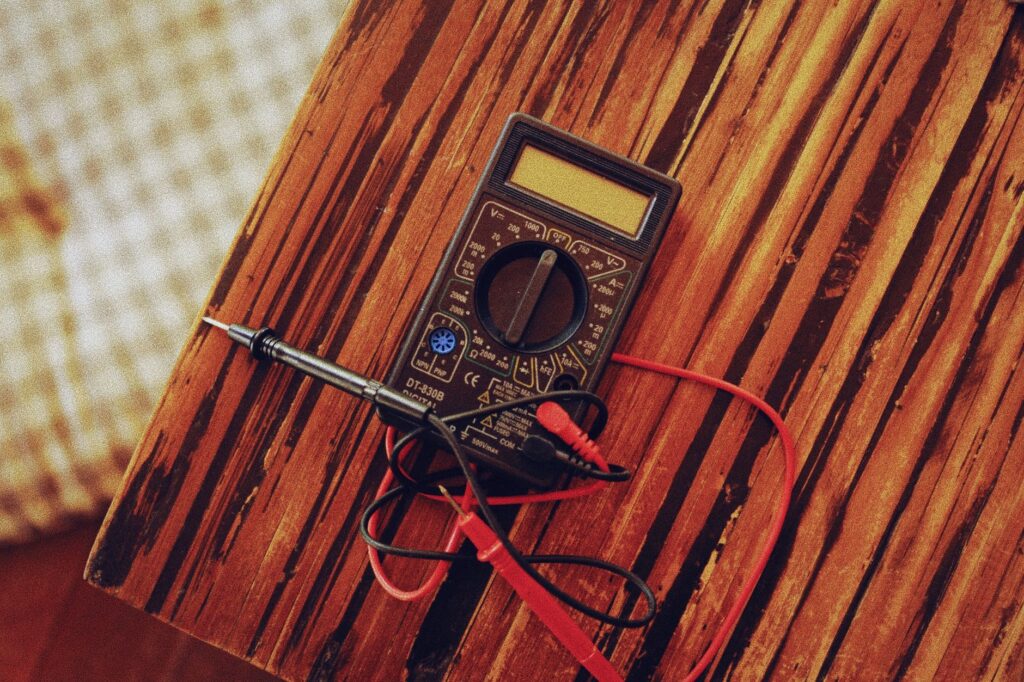
- Digital Multimeter with Wire Gauge Testing — Essential tool for verifying wire integrity and electrical safety, aligning with the post’s emphasis on proper wire selection to prevent hazards
See also: Ohm’s Law Calculator: The Complete Guide to Voltage, Current, and Resistance
See also: Voltage Drop Calculator: The Complete Guide to Wire Sizing and Safe Electrical Installations
Related: Wire Gauge Calculator: Your Complete Guide to Right-Sizing Electrical Wire
Related: Amperage Calculator: Size Wire & Breakers the Right Way
Related: Wire Gauge Calculator: Complete Guide to Choosing the Right Electrical Wire Size
SPONSORED
Estimating Software Built for Electrical Contractors
ArcSite lets you draw site plans, create estimates, and close jobs faster — all from your phone or tablet. Used by 100,000+ field service professionals.
Try ArcSite Free →Affiliate partner — we may earn a commission at no cost to you.