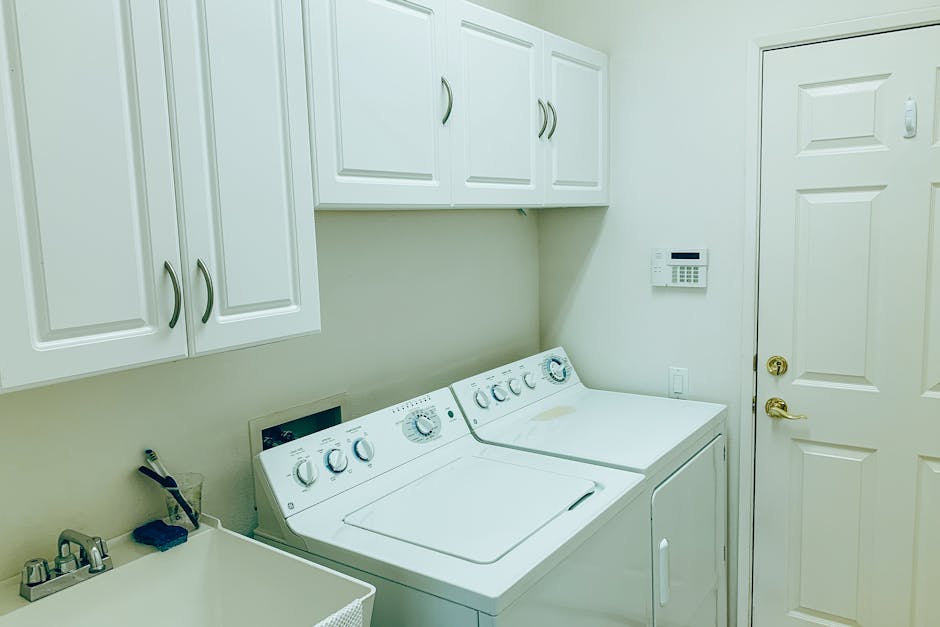
Laundry room circuits must include dedicated 20-amp circuits for washing machines and 30-amp circuits for electric dryers per NEC Article 210. Both appliances require separate circuits to prevent overloads and ensure code compliance. (Related: Washington State L&I Electrical Safety Standard Updates and NEC Code Compliance) (Related: Conduit Fill Calculator: Size Conduit the Right Way) (Related: Ohm’s Law Calculator: The Complete Guide to Voltage, Current, and Resistance) (Related: Commercial electrical service requirements and NEC code compliance for business installations in Pacific Northwest) (Related: Complete Guide to Three-Phase Power Residential Installation in 2026) (Related: Dimmer Switch Installation Load Limits: The Complete 2026 Guide)
NEC Code Requirements for Laundry Room Circuits
The National Electrical Code establishes clear minimum standards for laundry room electrical circuits. NEC Article 210.11(C)(2) mandates at least one 20-amp branch circuit dedicated exclusively to laundry receptacle outlets. This circuit cannot serve any other purpose — no lighting, no other outlets, nothing else shares this wire.
For electric dryers, NEC Article 220.54 requires a dedicated 30-amp, 240-volt circuit. Gas dryers need only a standard 120-volt, 20-amp circuit for the motor and controls, but that circuit should still be dedicated to the dryer outlet.
According to OSHA’s electrical safety standards, overloaded circuits are a leading cause of electrical fires in residential structures. The NEC’s dedicated circuit requirements for laundry appliances directly address this hazard by ensuring high-demand appliances always have clean, unshared power.
Key NEC laundry room wiring code requirements at a glance:
- Minimum one dedicated 20-amp circuit for the washing machine receptacle
- Dedicated 30-amp, 240-volt circuit for electric dryers
- Laundry circuits must be within 6 feet of the appliance location
- GFCI protection required for receptacles within 6 feet of a sink
- AFCI protection required in laundry areas under the 2020 NEC
Dedicated Circuits: Washing Machine vs. Dryer
What size breaker do I need for a washing machine and dryer?
A washing machine requires a 20-amp single-pole breaker on a 120-volt circuit. An electric dryer requires a 30-amp double-pole breaker on a 240-volt circuit. Gas dryers use a 20-amp single-pole breaker on a 120-volt circuit. Never upsize a breaker to solve a tripping problem — that defeats the protection the breaker provides.
Does a washing machine and dryer need separate circuits?
Yes, absolutely. A washing machine and dryer must be on completely separate, dedicated circuits. The NEC prohibits sharing these circuits with other outlets or appliances. Running both appliances on a shared circuit creates overload risk, nuisance tripping, and a serious fire hazard. Each appliance gets its own breaker, its own wire run, and its own outlet.
Here’s how the dedicated circuit requirements break down side by side:
| Appliance | Voltage | Breaker Size | Wire Gauge | Outlet Type |
|---|---|---|---|---|
| Washing Machine | 120V | 20-amp | 12 AWG | NEMA 5-20R |
| Electric Dryer | 240V | 30-amp | 10 AWG | NEMA 14-30R |
| Gas Dryer | 120V | 20-amp | 12 AWG | NEMA 5-20R |
Wire Gauge and Amperage Calculations for Laundry Appliances
Choosing the correct wire gauge is non-negotiable for safe laundry room wiring. The NEC 80% continuous load rule means your circuit wiring must handle 125% of the continuous load. Here’s how to apply that for each appliance:
Washing Machine Circuit: Most washing machines draw between 10 and 15 amps. On a 20-amp circuit, the 80% continuous load rule means your maximum continuous draw should not exceed 16 amps. A 20-amp circuit wired with 12 AWG copper satisfies this requirement comfortably.
Electric Dryer Circuit: Electric dryers typically draw 24 to 30 amps. NEC 220.54 specifies calculating dryer loads at 5,000 watts (5 kW) minimum or the nameplate rating, whichever is higher. At 240 volts, 5,000 watts equals approximately 20.8 amps — but nameplate ratings on most modern dryers push this to 24–30 amps, which is why the 30-amp circuit and 10 AWG wire standard exists.
Wire runs longer than 50 feet introduce voltage drop concerns. For a 20-amp washing machine circuit with a 75-foot run, voltage drop can exceed the NEC’s recommended 3% threshold if you stick with 12 AWG. In those cases, upsizing to 10 AWG preserves performance without changing the breaker size.
Use our wire gauge calculator to determine the correct conductor size based on your actual circuit length and load — it accounts for both the NEC ampacity tables and voltage drop in a single calculation.
GFCI and AFCI Protection in Laundry Rooms
Protection requirements for laundry room electrical circuits have expanded significantly under recent NEC editions.
GFCI Protection: NEC 210.8(A) requires GFCI protection for all 125-volt, 15- and 20-amp receptacles in laundry areas. This requirement was extended to include laundry areas in the 2020 NEC — prior editions only required GFCI protection near sinks. Today, your washing machine outlet needs GFCI protection regardless of its distance from water sources.
AFCI Protection: The 2020 NEC requires Arc-Fault Circuit Interrupter (AFCI) protection in laundry areas under Article 210.12. AFCI breakers detect the subtle electrical arcing signatures that precede many electrical fires — the type of fault a standard breaker won’t catch. Many jurisdictions have adopted the 2020 NEC, so confirm with your local AHJ (Authority Having Jurisdiction) which edition governs your area.
Combination AFCI/GFCI breakers exist and satisfy both requirements from the panel. They cost more than standard breakers but eliminate the need for GFCI outlets at the device level, which simplifies the laundry room wiring layout.
Common Laundry Room Electrical Layout Mistakes
These are the errors that consistently show up during inspections and service calls:
- Sharing the laundry circuit with other loads: Plugging a freezer, utility lighting, or dehumidifier into the washing machine’s dedicated circuit violates NEC 210.11(C)(2) and creates overload risk.
- Using 14 AWG wire on a 20-amp circuit: 14 AWG is only rated for 15-amp circuits. Running it on a
Recommended Resources:
- Siemens 200-Amp Main Breaker Panel — Essential for installing dedicated laundry circuits; readers planning upgrades will need quality main panels for NEC-compliant installations
- Leviton 30-Amp Double Pole Breaker — Directly supports the 30-amp dryer circuit requirement mentioned in the guide; essential component for proper electrical installation
- Klein Tools Electrical Tester Kit — Helps DIYers verify proper circuit installation and ensure NEC code compliance before operation
See also: Voltage Drop Calculator: The Complete Guide to Wire Sizing and Safe Electrical Installations
See also: Wire Gauge Calculator: The Complete Guide to Choosing the Right Wire Size
Related: Attic Outlet Installation: The Complete 2026 Guide to Running Circuits in Limited Space
Related: 5 Essential Laundry Room Electrical Circuits in 2026: Complete NEC Wiring Guide
Related: Dedicated Appliance Circuits: What Needs Its Own Breaker
Step-by-Step Laundry Room Electrical Installation Requirements
When installing electrical circuits in a laundry room, most homeowners underestimate the specific code requirements and safety standards that differ from standard room wiring. Understanding these installation specifics upfront prevents costly mistakes, failed inspections, and safety hazards that could damage appliances or create fire risks.
Laundry rooms demand dedicated circuits because washing machines and dryers draw significant amperage simultaneously. The National Electrical Code (NEC) requires:
- Separate 20-amp circuit for the washing machine (minimum 12 AWG wire)
- Dedicated 240-volt circuit for electric dryers (typically 30-50 amps depending on appliance specifications)
- GFCI protection on all outlets within 6 feet of water sources (washing machine area)
- Proper outlet spacing u2014 outlets must be spaced no more than 6 feet apart along walls
- Correct outlet types u2014 240V dryer outlets differ from standard 120V outlets and must match your appliance plug configuration
Gas dryers still require a dedicated 120-volt circuit for ignition systems and controls, even though they don’t need the 240V power of electric models. Many DIYers miss this requirement, leading to shared circuits that overload when the washing machine runs simultaneously.
The location and accessibility of your electrical panel matters significantly. If your panel is far from the laundry room, you’ll need proper wire sizing and conduit protection for longer circuit runs. Moisture, temperature fluctuations, and vibration from appliances also affect wire routing decisions that impact both code compliance and long-term safety.
Getting your laundry room electrical installation right the first time ensures your appliances operate safely, your home passes inspection, and you avoid expensive rewiring costs down the road.
SPONSORED
Estimating Software Built for Electrical Contractors
ArcSite lets you draw site plans, create estimates, and close jobs faster — all from your phone or tablet. Used by 100,000+ field service professionals.
Try ArcSite Free →Affiliate partner — we may earn a commission at no cost to you.
Advertisement