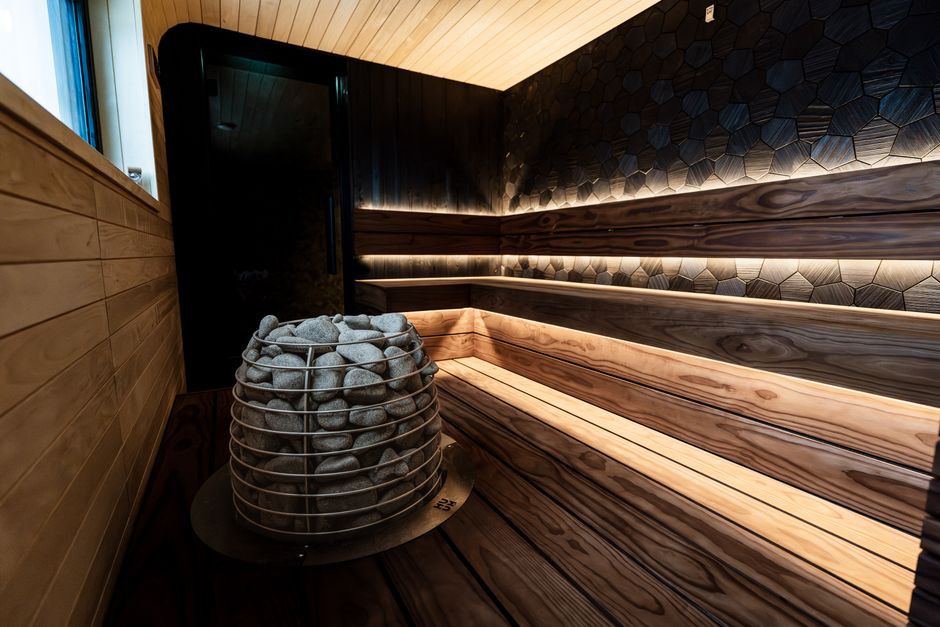
Saunas require a dedicated 240V circuit with proper wire gauge (typically 6-8 AWG), GFCI protection, and moisture-resistant components per NEC Article 682. Installation must include waterproof conduit, sealed junction boxes, and proper grounding to ensure safety in high-humidity environments. (Related: How AI Tools Can Help Electrical Engineers Master NEC Code and Calculations) (Related: Complete 2026 Guide: Crawlspace Electrical Requirements NEC) (Related: NEC Code Updates and Changes: What Electricians Need to Know About NFPA Reorganization) (Related: Washington State L&I Electrical Safety Standard Updates and NEC Code Compliance) (Related: Conduit Fill Calculator: Size Conduit the Right Way) (Related: Ohm’s Law Calculator: The Complete Guide to Voltage, Current, and Resistance)
Sauna Electrical Requirements Overview
Installing a residential sauna isn’t a plug-and-play project. Most residential sauna heaters draw between 30 and 60 amps at 240 volts, which puts them squarely in dedicated-circuit territory. The National Electrical Code (NEC) addresses wet and damp locations extensively, and saunas fall under that umbrella because of the extreme heat and humidity they generate.
Before any wire gets pulled, you need to confirm three things: the heater’s rated wattage, the circuit ampacity required to support it safely, and whether your panel has room for a double-pole breaker. Skipping this step leads to undersized wiring, nuisance trips, or worse — overheated conductors inside a wall cavity that’s literally surrounded by a heat source.
According to OSHA’s electrical safety standards, moisture and heat together represent one of the most hazardous combinations for electrical systems, making proper component selection and installation practices non-negotiable in sauna environments.
240V Circuit Specifications and Sizing
What size breaker do I need for a sauna?
Breaker sizing for a sauna follows the same 125% continuous load rule that governs most NEC circuit calculations. Here’s how that plays out in practice:
- 4 kW heater (about 17A at 240V): Minimum 25A double-pole breaker, 10 AWG wire
- 6 kW heater (about 25A at 240V): Minimum 35A double-pole breaker, 8 AWG wire
- 8 kW heater (about 33A at 240V): Minimum 40A double-pole breaker, 8 AWG wire
- 10–12 kW heater (42–50A at 240V): Minimum 60A double-pole breaker, 6 AWG wire
Sauna heaters are treated as continuous loads, meaning the circuit must be rated for 125% of the heater’s full load amperage. A 6 kW unit drawing 25A needs a circuit rated for at least 31.25A — which rounds up to a 35A or 40A breaker depending on available sizes and the manufacturer’s specification sheet.
Always check the heater’s installation manual. Manufacturers often specify the exact breaker size and wire gauge required, and deviating from those specs can void the warranty and create a code violation simultaneously. For sauna circuit breaker requirements, matching the manufacturer’s label data to the NEC calculation is the baseline, not the ceiling.
Use our circuit breaker sizing calculator to confirm your heater’s breaker rating before purchasing materials.
Can you use regular electrical wire in a sauna?
Standard NM-B (Romex) cable is not approved for sauna installations. NM-B is rated for dry locations only, and the interior of a sauna reaches temperatures that can damage the cable’s insulation over time even if moisture weren’t a factor. NEC Article 310 and Article 682 both require conductors with temperature ratings appropriate for the environment.
For sauna wiring, you need conductors rated for at least 90°C (194°F), typically THHN or THWN-2 wire pulled through metal conduit (EMT or rigid) or listed high-temperature cable assemblies. The conduit serves a dual purpose: it protects the wire mechanically and gives moisture a path away from the conductors rather than into them.
Moisture-Resistant Installation Best Practices
Sauna wire gauge specifications are only part of the equation. How you route and protect that wire matters just as much. These are the installation practices that separate a code-compliant job from a callback:
- Use weatherproof or vapor-tight conduit fittings at all entry points into the sauna structure. Standard EMT set-screw connectors are not rated for wet locations.
- Seal all penetrations through the sauna wall with UL-listed vapor barrier sealant to prevent humidity from migrating into the wall cavity and condensing on conductors.
- Mount the junction box outside the sauna where possible. If a junction box must be inside, use a rated weatherproof enclosure with gasketed cover.
- GFCI protection is required for all receptacles and should be strongly considered for the heater circuit itself. A 2-pole GFCI breaker at the panel provides whole-circuit protection.
- Ground the heater frame and any metal components in the sauna using an equipment grounding conductor sized per NEC Table 250.122.
Moisture-resistant sauna wiring isn’t just about wire type — it’s about system integrity from the panel to the heater terminal block. Every connection, every fitting, and every enclosure needs to be rated for the environment it lives in.
NEC Code Compliance for Saunas
The NEC addresses sauna-specific requirements primarily through Article 422 (Appliances), Article 680 (wet locations), and the general wiring methods in Article 310. Some jurisdictions also reference Article 682 for natural and artificially made bodies of water, though saunas are more commonly governed under the wet/damp location provisions of Article 310 and the appliance article.
Key compliance checkpoints for a 240 volt sauna installation include:
- Dedicated circuit — no shared neutral or shared breaker with other loads
- Correct ampacity with 125% continuous load factor applied
- Wire insulation rated for temperature and moisture exposure
- Listed conduit system or listed cable assembly
- Proper grounding and bonding
- GFCI protection at or near the panel
- Permit pulled and inspection completed before closing walls
Local amendments to the NEC are common. Always verify requirements with your local Authority Having Jurisdiction (AHJ) before starting work.
Common Sauna Electrical Mistakes to Avoid
These errors show up repeatedly in failed inspections and service calls:
- Undersizing the wire gauge. Using 10 AWG on a 40A circuit is a code violation and a fire hazard. Match wire size to breaker size, not just to the calculated load.
- Running NM-B cable into a sauna. As covered above, standard Romex has no place in this application.
- Skipping the permit. Unpermitted sauna wiring creates insurance liability and resale complications. It’s not worth the shortcut.
- Using undersized conduit. Trying to pull 6 AWG THHN through ½-inch conduit makes the job harder and can damage insulation during pulling.
- Forgetting equipment grounding. The heater’s metal chassis must be grounded independently — bonding to the neutral is not an acceptable substitute in modern installations.
- Southwire 6 AWG THHN Electrical Wire — Post specifically mentions 6-8 AWG wire gauge requirement; this is the exact wire size needed for 240V sauna circuits
- Hubbell GFCI 240V Outlet Breaker — Post emphasizes GFCI protection as mandatory per NEC Article 682; essential safety component for sauna installations
- Carlon PVC Waterproof Conduit Kit — Post requires waterproof conduit and sealed junction boxes for high-humidity sauna environments; directly addresses moisture-resistant components mentioned
Related: Complete Swimming Pool Bonding Requirements Guide for 2026
Related: Sauna Electrical Requirements: 5 Essential 240V Rules for 2026
Related: Electrical Permit Guide: When You Need One & Costs
See also: Surge Protector Circuit Breaker: The Complete Whole Home Guide for 2026
See also: Complete 240V Dryer Circuit Installation Guide for 2026
Related: Sauna Electrical Requirements: Complete 240V Guide for 2026
Related: Sauna Electrical Requirements: The Complete 240V Guide for 2026
SPONSORED
Estimating Software Built for Electrical Contractors
ArcSite lets you draw site plans, create estimates, and close jobs faster — all from your phone or tablet. Used by 100,000+ field service professionals.
Try ArcSite Free →Affiliate partner — we may earn a commission at no cost to you.